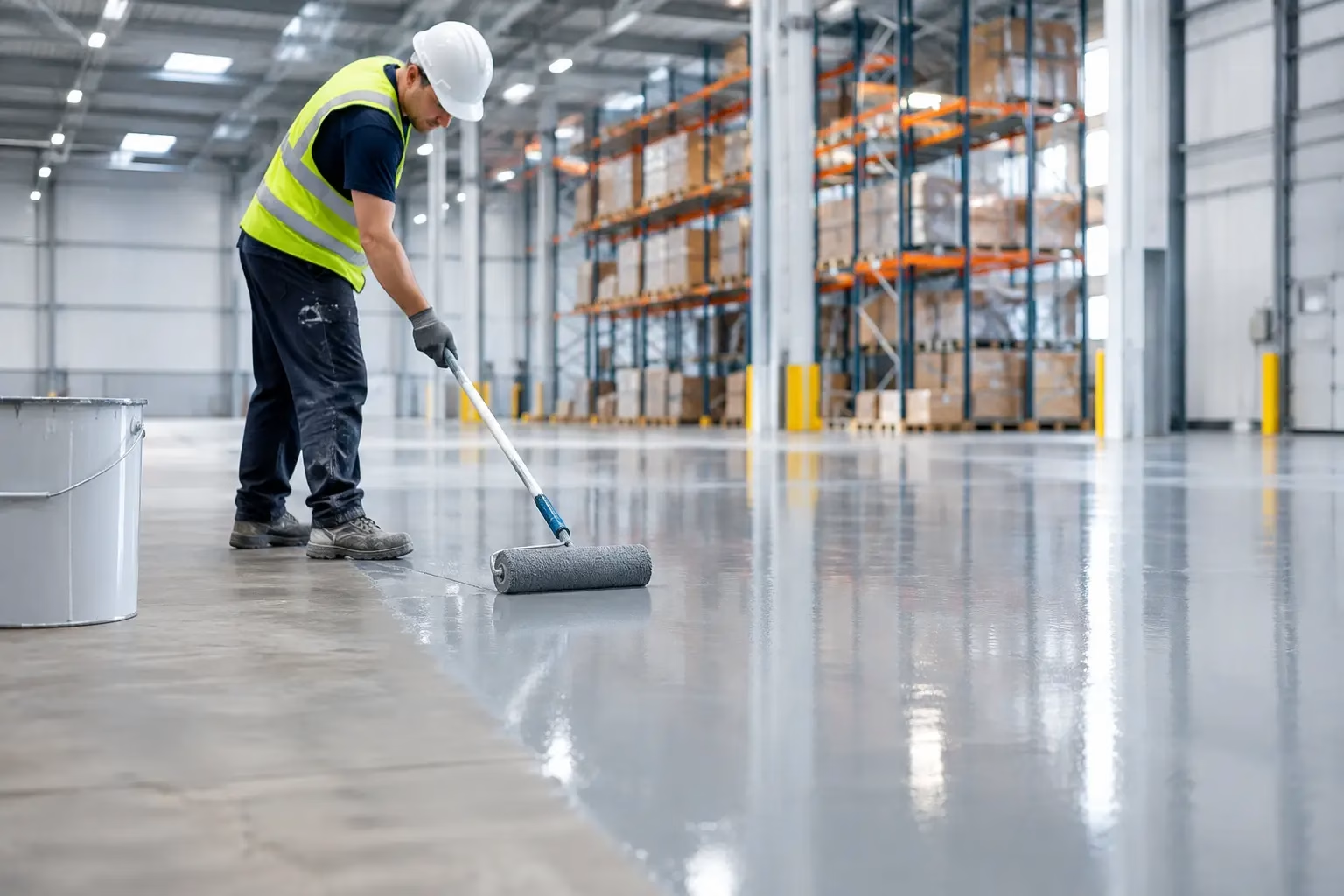
Forklift traffic rarely damages a warehouse floor all at once. The trouble starts at the turning lanes, loading doors, battery-charging areas, and rack aisles where concrete dust, moisture, impacts, and wheel pressure repeat every day. A successful warehouse coating project addresses those working conditions before selecting a color or finish. Done properly, it protects the slab, makes cleanup faster, and gives your operation a floor that looks as organized as it runs.
For owners and facility managers, the real decision is not whether a coating will look good on installation day. It is whether the system is built around the condition of the concrete, the traffic it will carry, and the downtime the operation can realistically accommodate. Those details determine whether a floor remains easy to maintain or becomes another recurring repair issue.
Start the Warehouse Coating Project With the Concrete
A coating system can only perform as well as the concrete beneath it. Warehouses often have slabs with years of forklift wear, oil contamination, tire marks, surface hardeners, old patching, and hidden moisture concerns. Covering those issues without resolving them first is a shortcut that can lead to bond failure, peeling, or visible defects later.
Our process begins with a close assessment of the slab. We look for cracks, spalling, pitting, weak concrete, failed joints, and areas where water may move through the slab. Cracks should be professionally repaired and deteriorated sections stabilized before coatings are applied. In a busy facility, this work is not cosmetic. It helps prevent a small defect from becoming a rough edge that catches wheels, holds dirt, or expands under traffic.
Mechanical surface preparation is equally important. The concrete needs the right profile for the coating to bond securely. Cleaning alone cannot replace professional grinding and preparation, especially where the slab has absorbed oils or has a dense, smooth finish. This is where many low-cost coating approaches fall short: they focus on the visible finish while underestimating the surface beneath it.
Moisture Deserves a Direct Answer
Moisture is one of the most expensive variables to ignore. A warehouse may look dry while vapor pressure is still moving through the slab, particularly near exterior walls, loading bays, and older concrete. Seasonal temperature swings, snowmelt, washdown routines, and ground moisture can all change conditions.
The right approach depends on what testing and site conditions reveal. Some facilities need localized repair and careful preparation; others may require a system designed to manage moisture risk. A professional consultation should make this discussion clear before work begins, not after the floor has been installed.
Match the System to Warehouse Traffic
Not every warehouse needs the same coating build. A light storage space with pallet-jack use has different demands than a distribution center with constant forklift turning, rolling loads, maintenance activity, and dock traffic. The most durable choice is the one that reflects how the space actually operates.
At Garage Floors 4 Less, we use FloorX2 Fusion+Nano® coating systems to create high-performance concrete protection with fast curing, strong adhesion, and practical resistance to daily wear. The system is designed to handle demanding slab environments while delivering a clean, finished appearance that is far easier to maintain than bare concrete.
For many warehouse applications, a full-flake broadcast finish is a smart option. It creates a consistent, textured surface that helps disguise dust, minor marks, and everyday traffic patterns. It also provides a more finished appearance for facilities where customers, vendors, or employees regularly walk through the space. The flake blend can be selected to support the building’s overall look without making the floor feel decorative at the expense of function.
Texture is a trade-off worth discussing. More texture can improve traction in areas exposed to water or contaminants, but an overly aggressive profile can make certain cleaning methods more difficult. A good specification considers both safety and maintenance. The same is true for finish color: lighter floors brighten a warehouse and make spills easier to spot, while mid-tone blends can be more forgiving in high-traffic aisles.
Plan Around Downtime, Not Just Installation Time
A warehouse coating project needs a schedule that respects shipping, receiving, staffing, and inventory movement. Closing an entire facility may not be realistic, but phased installation can often keep the project moving without disrupting every part of the operation.
Before installation, identify where inventory can be staged, which traffic lanes can temporarily close, and whether equipment can be rerouted. Loading areas, aisles, and service bays may need separate phases. The goal is to give the installation team sufficient access while keeping your operation predictable.
Fast-curing coating technology is especially valuable in commercial settings because it can reduce the wait between preparation, coating application, and return to service. That does not mean every floor should be rushed. Concrete repair, temperature, humidity, and the selected system all affect the schedule. What matters is having a clear plan based on site conditions instead of a generic promise.
Prepare the Space Before the Crew Arrives
The smoothest projects begin with practical site preparation. Move inventory and mobile equipment out of the work zone, identify utilities and floor drains, and communicate access restrictions to staff. If there are sensitive products, food items, or dust-sensitive processes nearby, tell the contractor early so containment and sequencing can be planned appropriately.
It is also helpful to document problem areas before work starts. Photograph active cracks, drainage concerns, damaged joints, and locations where forklifts routinely turn. Those details give everyone a shared reference point and make it easier to prioritize repairs that matter most.
Do Not Treat Repairs as an Add-On
Warehouses put stress on concrete in ways that residential spaces do not. Repeated wheel loads can break down weak edges. Dropped materials can chip the surface. De-icing salts and water brought in through loading doors can accelerate deterioration. If pitting and spalling are already present, a coating alone will not correct the underlying weakness.
Professional repair should be integrated into the scope from the beginning. That may include filling cracks, rebuilding spalled areas, smoothing damaged sections, and addressing transitions around drains or doorways. The result is a more uniform floor profile and a better foundation for the coating system.
Joint treatment requires judgment. Some joints must remain functional to accommodate slab movement, while others may be candidates for filling based on their location and use. The answer depends on the building, the slab, and the traffic pattern. A contractor who treats every joint the same can create problems that were avoidable.
Think Beyond the Floor’s First Week
A coated warehouse floor should make routine cleaning simpler. Dust and debris are easier to see and remove on a finished surface, and spills are less likely to disappear into porous bare concrete. That can support a cleaner work environment and reduce the time spent chasing stains that have become permanent.
Maintenance is straightforward, but it still matters. Use cleaning products appropriate for the floor, remove abrasive debris regularly, and address chemical spills promptly. Avoid dragging sharp metal objects across the surface, and use protective measures under equipment that remains stationary for long periods. A floor designed for industrial use is durable, not indestructible.
When you choose an eligible FloorX2 installation from Garage Floors 4 Less, our 15-year all-inclusive transferable guarantee adds meaningful long-term confidence. It reflects the value of professional preparation, a multi-layer system, and an installation process designed to protect the concrete rather than merely cover it.
A Better Floor Supports a Better Operation
The best warehouse coating project is rarely the one with the lowest initial price. It is the one that accounts for slab repairs, moisture, traffic, safety, appearance, and operational downtime before the work begins. That planning produces a floor that is easier to clean, more professional to walk through, and better suited to the demands placed on it every shift.
If you are considering a warehouse floor upgrade, use our Floor Visualizer to explore finish options or request a free estimate. We can help you assess the concrete, plan the project around your operation, and select a system built for the way your facility works.