A workshop floor has to accept more abuse than most surfaces in a home. It sees dropped tools, rolling equipment, oil drips, hot tires, wet boots, road salt, and the occasional project that gets away from you. The best workshop floor solutions do not simply cover those problems. They start by correcting the concrete beneath them, then create a finish that is easier to clean, safer to use, and built for daily work.
For most concrete workshops, the strongest long-term answer is a professionally prepared, multi-layer full-flake coating system. The result is a floor that looks finished enough for a showroom but works hard enough for a real garage, hobby space, or commercial service area.
Why bare concrete struggles in a working shop
Concrete is durable, but it is not naturally protected. Its porous surface absorbs oil, chemicals, moisture, and tire residue. That is why an unfinished slab often develops dark stains that seem impossible to remove. In Canadian climates, moisture entering small cracks can also contribute to deterioration during repeated freeze-thaw cycles.
The visible damage is only part of the issue. Pitting, spalling, weak top layers, and hairline cracks make sweeping harder and create places where dirt, metal filings, and liquids collect. If you use a floor jack, move cabinets, roll a motorcycle, or work on vehicles, those flaws become more than cosmetic.
A quality workshop floor solution gives the slab a protective wear surface. But that protection is only as dependable as the preparation underneath it. Applying a coating over dust, contamination, weak concrete, or unresolved damage is a shortcut that can lead to peeling and failure.
The best workshop floor solutions begin with preparation
A professional floor installation should not begin with a roller. It should begin with an assessment of the concrete itself. We look for cracks, delamination, moisture concerns, previous coatings, salt damage, and areas where the surface has become soft or broken down.
Mechanical diamond grinding is a critical step because it removes weak material and creates the proper surface profile for the coating system to bond. This is very different from simply cleaning the slab or using an acid-based preparation method. Grinding also helps expose defects that need repair before the decorative finish is installed.
Crack repair matters because cracks can telegraph through a finished floor if they are ignored. The right repair approach depends on whether the crack is stable, moving, wide, deep, or associated with damaged concrete around it. Spalled and pitted sections may also need to be rebuilt so the completed floor feels smooth, solid, and intentional.
This preparatory work is not the most glamorous part of a workshop transformation, but it is often what separates a floor that lasts from one that becomes another repair project.
Full-flake coatings for workshops that see real use
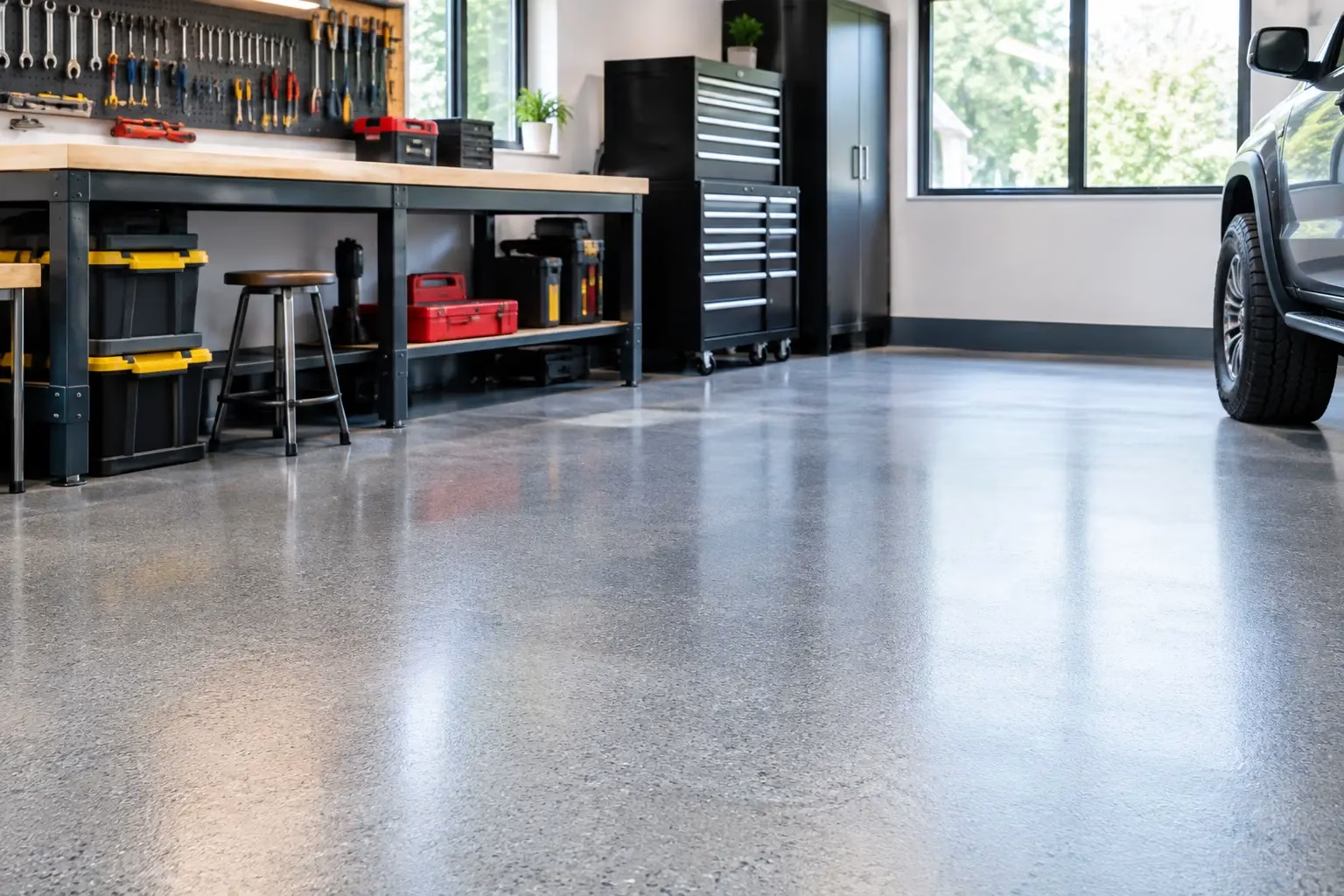
For homeowners who want durability without sacrificing appearance, a full-flake broadcast floor is a practical choice. Colored vinyl flakes are broadcast across the base coat until the surface is fully covered, then sealed within a protective topcoat. The finished look has depth and texture, helping hide dust, minor debris, and everyday marks better than a plain painted floor.
Full-flake finishes also give workshop owners options. A lighter blend can brighten a dim garage and make dropped hardware easier to spot. A darker blend can create a more industrial look and may better disguise certain kinds of tracked-in dirt. The best color is not always the trendiest one. Consider how much natural light the room receives, how often you clean, and whether the space is mainly for vehicles, woodworking, hobbies, or customer-facing work.
Texture deserves the same consideration. A properly finished floor should offer dependable footing without becoming difficult to sweep or mop. A shop used for wet vehicles or frequent washdowns may benefit from a more slip-resistant finish than a climate-controlled hobby room. The right balance is specific to how the space is used.
Why conventional epoxy is not the simple answer
Epoxy has a long history in garage and workshop flooring, and it helped establish the expectation that concrete floors could be protected and upgraded. However, traditional epoxy systems can be sensitive to installation conditions and may not be the best fit for every working environment. Long cure windows can keep a shop out of service, and some surfaces can yellow or discolor with UV exposure.
At Garage Floors 4 Less, we use FloorX2 Fusion+Nano® coating systems designed for the conditions that make workshops demanding. This advanced nanospartic technology offers fast curing, UV stability, and resistance to hot-tire pickup. That is valuable in spaces where vehicles come and go, sunlight reaches the slab, and downtime is inconvenient.
Fast curing is more than a scheduling feature. A one-day professional installation can reduce disruption to your work, storage, and vehicle routine. It also means you can move from a stained, damaged slab to a finished usable floor without turning the garage into a weeks-long construction zone.
Match the floor system to the way you work
There is no single finish that is right for every workshop. A home mechanic may prioritize chemical resistance, simple cleanup, and a surface that handles tire traffic. A woodworker may care most about light reflectivity, easy sweeping, and a finish that does not make sawdust or small fasteners disappear. A commercial service bay may need to account for heavier loads, constant traffic, and the practical need to keep operations moving.
Before selecting a system, think through what actually touches the floor. Consider vehicles, rolling toolboxes, workbenches, floor jacks, welding equipment, solvents, cleaning products, and seasonal moisture. Also consider what happens at the edges of the room. Concrete steps, stem walls, and transitions near doors can be vulnerable areas that deserve attention during the project.
A coating system should support the room’s function, not force you to work around it. For example, a beautiful light finish may be worthwhile in a detail-oriented hobby space, while a balanced flake blend may be the smarter choice for a heavily used garage workshop with kids, pets, and winter road grime.
A clean workshop is easier to use
The practical payoff of a protected floor is felt every time you clean up. Instead of scrubbing stains out of porous concrete, you can sweep debris, use a soft mop, and address spills before they sit. A finished floor also makes it easier to see what needs attention: a small fluid leak, a loose fastener, or an accumulating pile of sawdust.
That cleaner foundation can change how the whole space functions. Once the floor is no longer an eyesore, homeowners often rethink storage, cabinetry, slatwall, overhead racks, and work zones. A workshop becomes less of a place to store unfinished projects and more of a space where you want to spend time.
The goal is not to create a floor that demands special treatment. It is to create one that makes regular use and regular maintenance simpler.
Look beyond the initial price
Comparing workshop flooring by upfront price alone can be misleading. A low initial quote may leave out concrete repairs, serious surface preparation, adequate coating thickness, or a clear plan for moisture and damaged areas. Those details affect both appearance and service life.
Ask how the concrete will be prepared, how cracks and spalling will be addressed, what layers are included, and when you can use the floor again. Also ask what guarantee stands behind the installation. Our FloorX2 system includes a 15-year all-inclusive transferable guarantee, providing meaningful coverage for a major improvement to your home.
The best value is not the cheapest floor on installation day. It is the floor that keeps your workshop cleaner, more functional, and better protected through years of projects, vehicles, and changing seasons.
A workshop should be ready when inspiration strikes, not held back by a dusty, stained, deteriorating slab. Use our Floor Visualizer to explore finish ideas, or request a free estimate to discuss the right concrete repair and coating plan for your space.