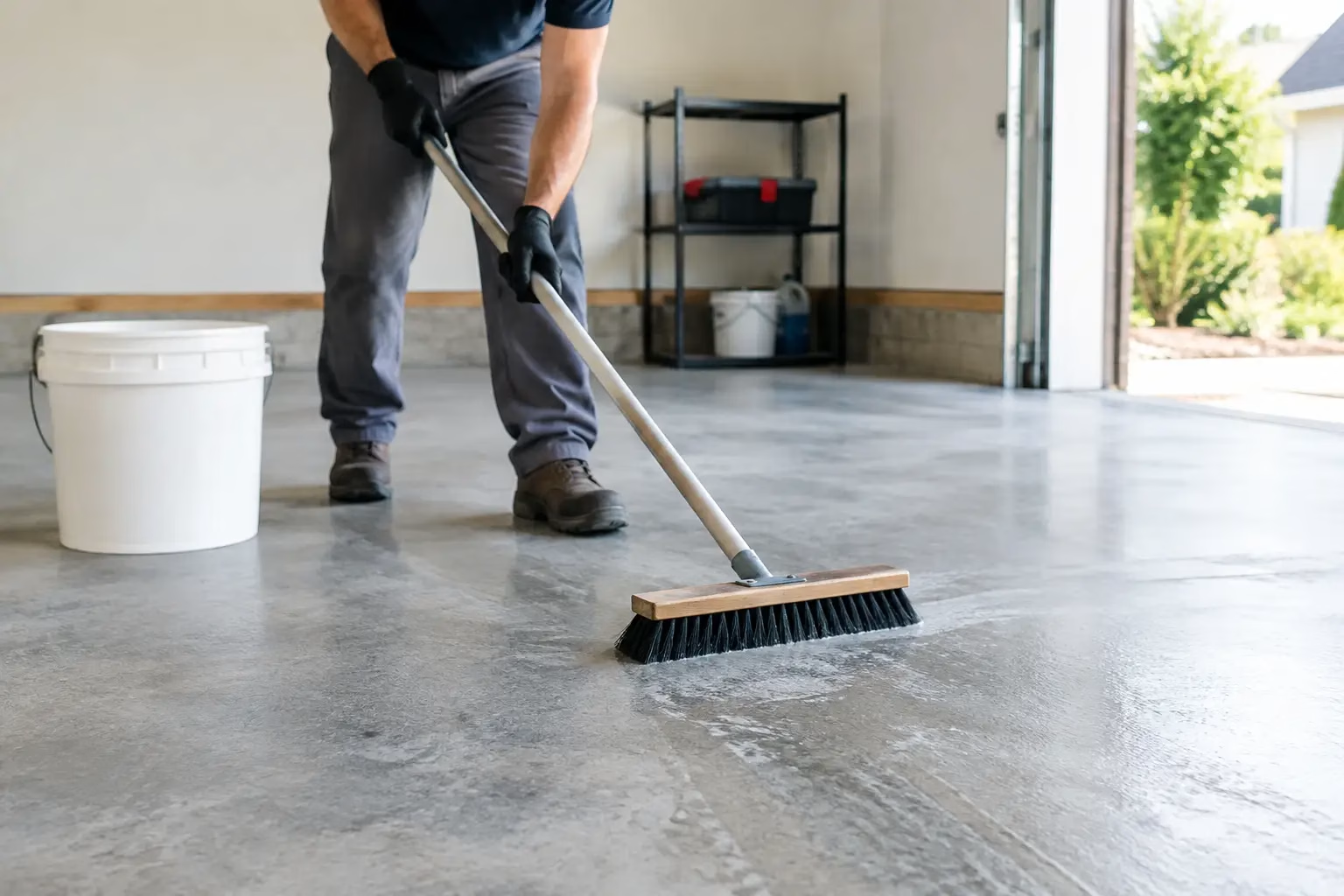
A beautiful garage floor does not begin with the coating colour or flake blend. It begins with the slab underneath. To prepare garage concrete correctly, every stain, weak surface layer, crack, and moisture concern must be addressed before a protective floor system is installed. Skipping this work is how homeowners end up with peeling coatings, visible repairs, and a floor that disappoints long before it should.
At Garage Floors 4 Less, preparation is not an extra step. It is the foundation of a floor built to handle vehicles, road salt, moisture, dropped tools, and Canadian freeze-thaw conditions. Here is what proper concrete preparation involves and why it matters so much.
Start by Assessing the Concrete, Not the Surface Appearance
A garage slab can look reasonably clean and still have problems that affect coating adhesion. Years of tire traffic, oil drips, de-icing salt, old paint, curing compounds, and household chemicals can penetrate concrete. Concrete also naturally develops pores, cracks, and areas of surface weakness over time.
The first step is a close inspection. We look for cracks, pitting, spalling, scaling, previous coating failure, discoloration, and areas where the concrete sounds hollow or breaks apart at the surface. A few hairline cracks may be largely cosmetic. Wider cracks, active movement, or spalled areas need a more targeted repair plan before the floor can be coated.
This assessment also helps determine whether the slab has a moisture issue. A garage floor may be exposed to moisture from below the slab, from melting snow and rainwater, or from poor drainage near the foundation. A coating system needs to be selected and installed with those conditions in mind.
Clear the Garage Completely Before Preparation Begins
Concrete preparation requires full access to the slab. Vehicles, storage bins, shelving, appliances, and workbenches should be removed from the garage whenever possible. A clear floor lets installers inspect every area, repair damage consistently, and create a uniform finish from wall to wall.
This is also a good time to decide how you want the garage to function after the floor is complete. If your goal is a cleaner workshop, better vehicle storage, or a more organized entry point into the home, planning cabinets, slatwall, or overhead storage before installation can prevent unnecessary disruption later.
Repair Cracks, Pitting, and Spalling First
Coatings protect concrete, but they do not erase structural damage or make a deteriorating slab sound. Cracks and damaged areas must be opened, cleaned, and repaired with materials suited to the condition of the concrete.
Crack repair is especially important because cracks tend to collect dirt and moisture. If they are simply coated over, they can remain visible or telegraph through the finished floor. The same is true of pitting and spalling, where the concrete surface has flaked away due to salt exposure, water, impact, or freeze-thaw cycles.
A professional repair process restores the profile of the damaged area so the finished floor looks intentional and performs consistently. It is worth understanding the trade-off here: an older slab with widespread movement or severe deterioration may still show minor signs of its history. The goal is not to pretend the concrete is new. The goal is to stabilize, protect, and dramatically improve the surface for daily use.
Mechanical Preparation Creates the Bond
Cleaning alone is not enough to prepare garage concrete for a long-lasting coating. The slab needs the right surface profile so the base layer can bond into the concrete rather than simply sit on top of it.
Professional mechanical preparation removes weak surface material, contaminants, and laitance, the fine dusty layer that can form at the top of cured concrete. It also opens the concrete pores and creates a textured profile engineered for adhesion. Depending on the slab and the coating system, this may involve diamond grinding with commercial dust-control equipment.
This step is one of the biggest differences between a professional installation and a shortcut approach. Acid etching can be inconsistent, particularly when concrete has dense finishing, contamination, or prior sealers. Grinding gives installers direct control over the concrete surface and reveals issues that need repair before the coating is applied.
The result is not merely a cleaner floor. It is a stronger foundation for the complete coating system.
Remove Oil, Salt, and Hidden Contaminants
Garages work hard. Motor oil, transmission fluid, fuel, road salt, tire residue, waxes, and cleaning products can all interfere with adhesion. Even if a stain is no longer obvious, residue may remain in the concrete.
Contaminated areas need to be treated before mechanical preparation, and sometimes again after grinding reveals deeper penetration. Salt is particularly relevant in regions with winter driving conditions. It can contribute to concrete deterioration and may draw moisture into the slab, which is why a garage floor needs more than a cosmetic surface treatment.
Professional preparation accounts for what has happened in the garage over the years, not just what the floor looks like on installation day. That is how we avoid building a premium finish over a compromised surface.
Address Moisture Before It Causes Coating Failure
Concrete is porous and can transmit moisture vapour. That does not automatically mean a floor cannot be coated, but it does mean the condition needs to be evaluated correctly. Moisture-related failure often appears as blistering, delamination, cloudy areas, or sections that release from the slab.
Sources of moisture vary. Some garages get regular snowmelt and puddling from vehicles. Others have exterior grading concerns, water entering near the overhead door, or moisture vapour moving through the slab from below. Each situation calls for a different solution.
A properly designed flooring system considers the environment, substrate condition, and expected use. Our FloorX2 Fusion+Nano® system is built for demanding garage conditions, including temperature swings, hot tires, and regular exposure to moisture. Surface preparation remains essential, because even advanced materials need a properly prepared slab to deliver their full value.
Choose a Finish That Fits How You Use the Garage
Once the concrete has been repaired and mechanically prepared, it is ready for a high-performance multi-layer system. A full-flake broadcast finish is a popular option because it creates a clean, decorative surface while helping disguise minor day-to-day dust and debris. It also gives the floor visual depth that a plain painted surface cannot match.
Colour selection should work with the garage as a whole. A neutral flake blend often complements vehicles, cabinetry, walls, and storage systems while keeping the space bright. Darker finishes can create a more dramatic look, but may show light dust more readily. The best choice depends on your lighting, usage, and the look you want every time the garage door opens.
For homeowners who want the garage to feel like an extension of the home, the floor is often the starting point. Once the concrete is protected and easy to clean, it becomes much easier to add organized storage and use the space with confidence.
Why Professional Preparation Pays Off
A garage floor coating is only as dependable as the surface beneath it. Proper repairs, moisture evaluation, diamond grinding, and careful application take time and specialized equipment, but they prevent the most frustrating problems: peeling, hot-tire pickup, premature wear, and damaged concrete continuing beneath a new finish.
Our professionally installed FloorX2 Fusion+Nano® flooring system is designed for rapid installation and long-term protection, with a 15-year all-inclusive transferable guarantee. That guarantee reflects the confidence we place in the complete process, from preparing the slab to applying every layer of the finished floor.
If you are ready to turn stained, cracked, or bare concrete into a garage floor you will be proud to use, try our Floor Visualizer to explore finish options or request a free estimate from our team.