The quickest way to make a garage feel larger is not buying another bin. It is getting the things that belong on the floor onto the walls. Learning how to organize garage walls gives every tool, bike, yard item, and seasonal tote a defined home while preserving the open space you need for vehicles, projects, and easy cleaning.
A wall-storage plan works best when it starts with how your garage is actually used. A family that cycles every weekend needs a different setup than a homeowner who maintains a workshop or stores snow-removal equipment. The goal is not to fill every inch of wall space. It is to create accessible storage that keeps heavy, dirty, and frequently used items where they make sense.
Start by Planning How to Organize Garage Walls
Before installing slatwall, cabinets, or hooks, clear enough floor space to see what you have. Sort items into broad groups: automotive supplies, hand and power tools, garden equipment, sports gear, seasonal items, and household overflow. Then decide what should stay close at hand, what can be stored higher up, and what no longer earns a place in the garage.
This step prevents a common mistake: installing storage around clutter instead of designing storage to eliminate it. A garage wall should support your routine. Keep car-care products near the parking area, for example, and place lawn tools close to the garage door or the side entrance used for yard work.
Measure each usable wall, including the space above workbenches and beside doors. Note outlets, windows, electrical panels, hose bibs, and garage-door tracks. Electrical panels must remain accessible, and wall storage should never interfere with the travel of an overhead door.
Build zones before choosing products
Think of the garage as a series of work zones rather than one large storage room. A parking zone needs clear vehicle doors and a pathway. A tool zone benefits from cabinets, a work surface, and visible hand-tool storage. A garden zone needs long-handled-tool holders and room for muddy equipment. Sports equipment usually works best near the door, where children can return it without crossing the whole garage.
Zones also make maintenance easier. When every category has a home, it is obvious when equipment has been left out. The garage stays usable instead of gradually becoming a holding area for everything that does not fit inside the house.
Choose the Right Garage Wall Storage Mix
The strongest garage organization systems combine open and closed storage. Open storage makes everyday items easy to grab. Closed cabinets reduce visual clutter and protect supplies from dust. Overhead storage handles items that are needed only a few times a year.
Use slatwall for flexibility
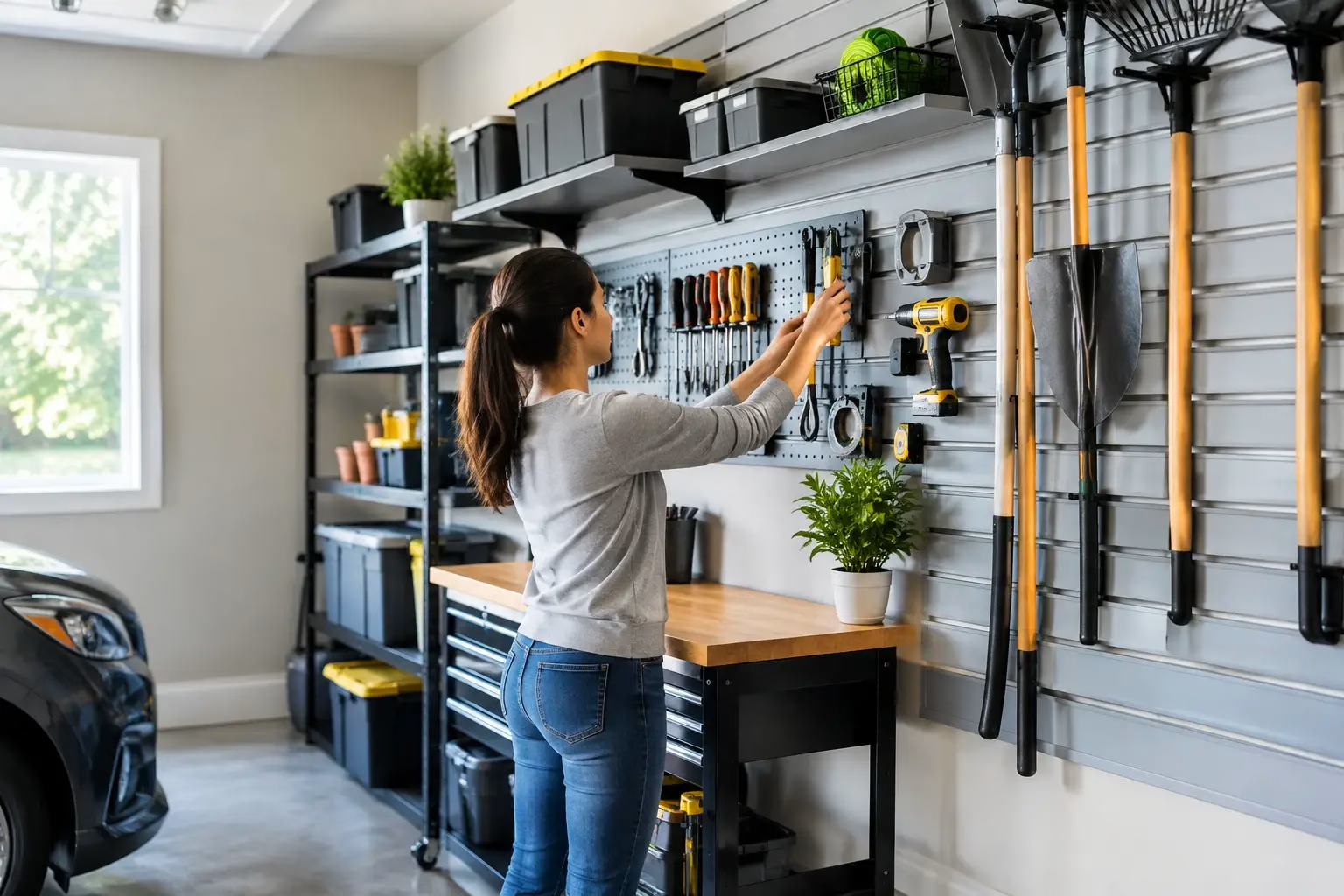
Slatwall is one of the most adaptable choices for garage walls because hooks, baskets, shelves, and specialty holders can be moved as your needs change. That matters more than it may seem. Bikes, strollers, hockey bags, and lawn equipment often change with the season or with the stage of family life.
Use sturdy hooks for bicycles, ladders, extension cords, leaf blowers, and folding chairs. Install them at a height that allows items to hang freely without dragging on the floor. For frequently used hand tools, a rail or slatwall-mounted tool holder keeps handles visible and prevents the familiar pile of rakes and shovels in the corner.
Do not overload a wall simply because there is room. Leave a little open capacity for future purchases and temporary storage needs. A flexible system is valuable precisely because it can adapt without requiring a full reorganization.
Add cabinets for chemicals, supplies, and visual calm
Cabinets are best for items that should be protected, contained, or kept out of sight. Automotive fluids, detailing products, paint supplies, small tools, and household maintenance materials all benefit from enclosed storage. Choose durable cabinetry with adjustable shelving so containers of different heights can fit without wasted space.
Keep chemicals in their original labeled containers and avoid storing them directly beside heat sources. A lockable cabinet is a smart choice for homes with young children. It also gives the garage a cleaner finish, particularly when the space doubles as a workshop or a place to welcome guests.
Reserve overhead storage for seasonal items
Overhead racks solve a specific problem: bulky items that you need to keep but rarely need to reach. Holiday décor, camping gear, seasonal tires, and labeled storage totes are good candidates. They are not the right place for heavy objects you struggle to lift safely, or for anything you use weekly.
Place heavier totes closer to supporting walls where appropriate, follow the rack manufacturer’s load limits, and keep storage clear of garage-door tracks and openers. Clear, labeled bins reduce the need to pull down multiple containers to find one item.
Make Access and Safety Part of the Design
An organized wall that is difficult to use will not stay organized. Store the heaviest and most frequently used items between knee and shoulder height. Put lightweight seasonal gear higher up. Long-handled tools can hang vertically, but leave enough space to remove one without catching adjacent equipment.
Bikes deserve special attention. Vertical bike hooks free substantial floor space, but they may not suit every household. If lifting a bike overhead is uncomfortable, a lower wall-mounted rack or a vertical wheel cradle may be a better fit. The best storage solution is one every member of the household can use safely.
Keep a clear path from the garage door to the house door, and do not store gasoline, solvents, or other flammables near ignition sources. If your garage has a furnace, water heater, or other mechanical equipment, respect required clearances and keep that area unobstructed.
Let the Floor Support the Wall System
Wall organization is more effective when the floor underneath is clean, durable, and easy to maintain. Once tools and equipment are lifted away from bare concrete, sweeping becomes faster, moisture is easier to spot, and the entire garage feels more intentional.
For garages with cracks, pitting, stains, or surface deterioration, address the concrete before completing the transformation. A professionally prepared FloorX2 Fusion+Nano® full-flake system provides a finished foundation beneath your wall storage, with resistance to hot-tire pickup, UV exposure, and the moisture challenges associated with Canadian freeze-thaw conditions. Its fast cure also helps keep a garage upgrade moving without a long shutdown.
At Garage Floors 4 Less, we repair damaged concrete and install high-performance floor systems as part of a complete garage transformation. Our 15-year all-inclusive transferable guarantee gives homeowners confidence that the finished space is built for daily use, not just a good first impression.
Keep the System Working After Installation
A practical organization plan needs a simple reset routine. Once each season, take 20 minutes to return misplaced gear, remove broken or unused items, and adjust hooks or shelves for the months ahead. Winter equipment should be easy to reach before the first storm, while gardening tools can move forward in spring.
Avoid letting unopened boxes accumulate on the floor. If an item does not have a designated wall, cabinet, or overhead location, decide whether it belongs in the garage at all. This one rule protects the open floor space you worked to create.
The right garage wall system does more than hide clutter. It gives your vehicles room, makes projects easier to start, and turns the garage into a space that works as hard as the rest of your home. Try our Floor Visualizer to picture the finished space, or request a free estimate for a professionally planned garage transformation.