A workshop floor has a tougher job than most surfaces in the home. It deals with dropped tools, tire traffic, oil, sawdust, welding debris, moisture, and the occasional project that gets bigger than planned. The right workshop floor coating ideas start with how you use the space, not just which color looks good beside your workbench.
At Garage Floors 4 Less, we help homeowners turn stained, dusty, or cracked concrete into a clean, hard-working foundation for serious projects. A professionally installed FloorX2 Fusion+Nano® system can protect the slab, simplify cleanup, and make the workshop feel like a finished part of the property rather than an unfinished storage area.
Start With the Concrete, Not the Color
A coating is only as dependable as the concrete beneath it. Many workshop slabs have hairline cracks, pitting, old stains, surface spalling, or moisture-related damage that must be addressed before any finish is applied. Covering those issues without proper preparation may improve the appearance briefly, but it does not stop the damage from affecting the finished floor.
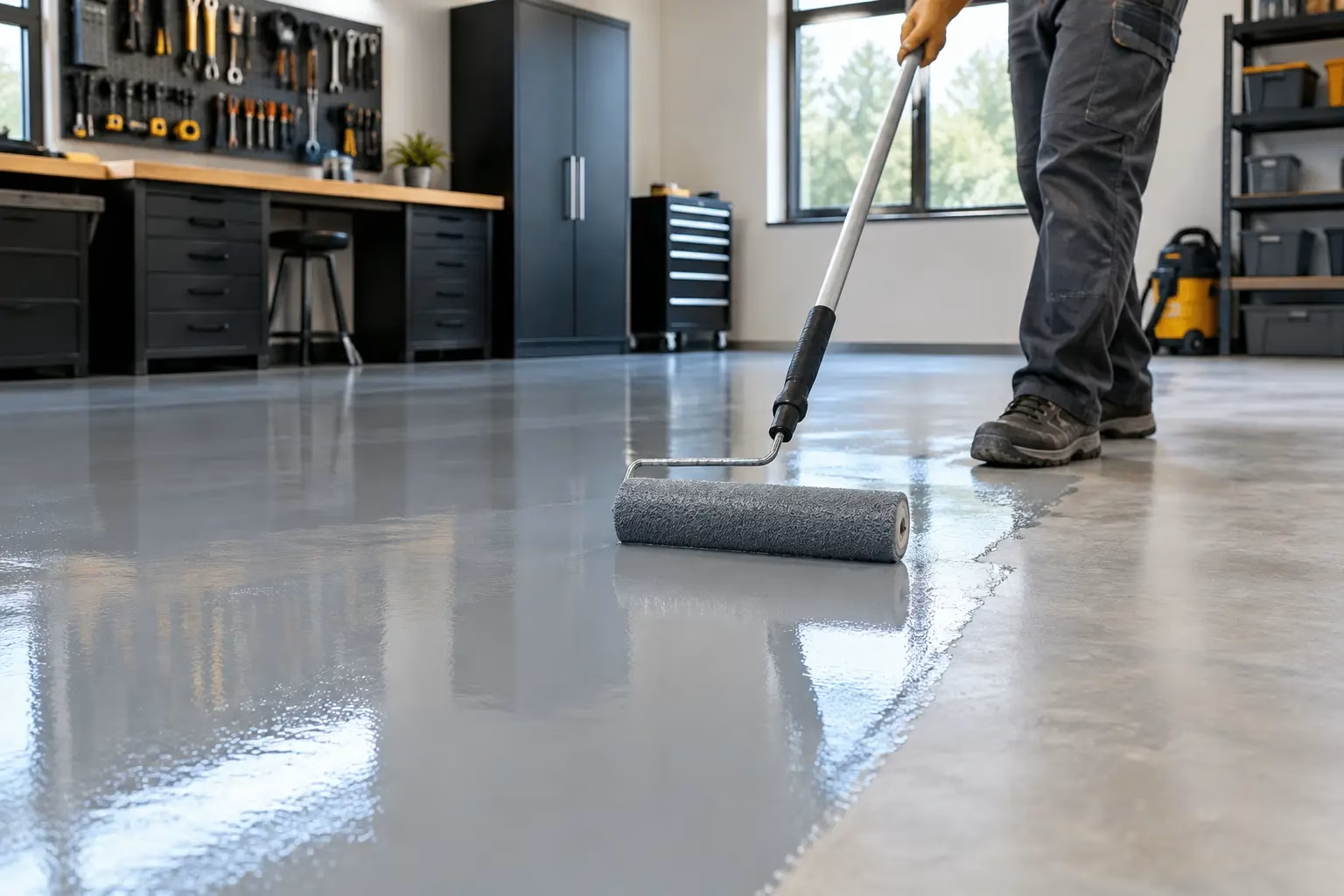
Professional mechanical preparation opens the concrete surface so the coating can bond correctly. Repairs are then completed before the base layers and finish are installed. This matters especially in Canadian garages and workshops, where freeze-thaw cycles, road salt, wet vehicles, and temperature swings can punish an unprotected slab.
7 Workshop Floor Coating Ideas for Real Use
1. Full-flake broadcast for an all-purpose workshop
A full-flake broadcast finish is often the most practical choice for a multipurpose workshop. Decorative flakes are broadcast across the floor to create a textured, visually consistent surface that helps disguise dust, scuffs, and the small marks that come with daily work.
This finish works well for homeowners who use the same space for vehicle maintenance, woodworking, seasonal storage, and weekend projects. The pattern adds visual depth without making the floor look overly busy, while the protective topcoat creates an easy-clean surface for dirt, oil, and everyday spills.
2. Neutral gray flakes for a clean, professional look
Gray-based blends remain a smart choice when you want the workshop to look bright, orderly, and timeless. They complement metal shelving, black cabinets, wood worktops, and most vehicle colors without competing with the rest of the room.
A medium gray blend is also forgiving. It does not show every footprint the way a very light floor can, and it does not make the space feel dark like a nearly black finish sometimes can. For homeowners planning to sell in the future, neutral tones provide broad appeal while still delivering a major visual upgrade.
3. Darker blends for heavy-duty work zones
If the workshop sees frequent mechanical work, darker flake blends can be a practical option. They can conceal the appearance of tire marks, dust near machinery, and occasional shop grime between cleanings. This is particularly useful in spaces where the floor needs to look presentable but will never be treated like a showroom.
The trade-off is light reflection. In a workshop with limited natural light, a dark floor can make the room feel smaller. Pairing it with bright task lighting, light-colored walls, or organized wall storage helps keep the space open and functional.
4. A lighter finish for hobby and detail work
For a workshop dedicated to craft work, restoration, detailing, or assembly, a lighter flake blend can improve visibility. A brighter finished floor reflects more light onto the work area, making it easier to spot dropped fasteners, small parts, and debris that should be cleaned up.
This approach makes sense when the room is used more like a studio than a parking space. It may require slightly more frequent cleaning to maintain its crisp appearance, but the payoff is a brighter, more polished environment that encourages you to use the space.
5. Define a garage workshop with one continuous floor
A garage that doubles as a workshop can feel disjointed when the concrete is stained, patched, and marked by years of use. Applying one continuous coating system across the entire slab creates a visual connection between the vehicle area, tool zone, storage wall, and entry point.
Rather than dividing the room with different floor materials, use cabinets, slatwall, overhead storage, or workbench placement to organize the zones. The uninterrupted floor is easier to sweep and gives the entire garage a more intentional, finished appearance.
6. Repair damaged concrete before adding the finish
One of the most valuable workshop floor coating ideas is also the least decorative: repair the slab first. Cracks, pitting, and spalling are not just cosmetic problems. They can collect dirt, catch rolling equipment, and allow damage to spread as the concrete is exposed to water and impact.
A professional coating project should include an assessment of the slab condition before finish selection begins. Once repairs and preparation are handled correctly, the finished surface looks more uniform and has the foundation it needs for long-term performance. This is where a professional installation differs from simply applying a coating over whatever condition the floor is in.
7. Choose a fast-curing system for less disruption
Workshops are rarely empty for long. Tools, vehicles, shelving, and project materials all need somewhere to go during a renovation. A fast-curing FloorX2 Fusion+Nano® nanospartic system is designed for efficient professional installation, helping minimize the time your workshop is out of service.
Fast return to use is valuable, but it should never come at the expense of preparation. The best result combines thorough concrete preparation, proper repairs, layered coating technology, and a cure schedule suited to the space. Our one-day installation process is built around that balance, so homeowners can get back to using their workshop sooner.
What Makes a Workshop Coating Worth the Investment?
A workshop floor should be selected for performance first and appearance second, although a well-designed finish delivers both. Look for a system that can handle abrasion, impacts, moisture, hot tires, and routine cleaning without becoming a maintenance project of its own. UV stability also matters in workshops with windows, open doors, or direct sun exposure, since discoloration can make a new floor look prematurely aged.
The topcoat should create a smooth, non-porous surface that does not trap concrete dust or absorb common workshop messes. That does not mean the floor is indestructible. Sharp metal edges, severe impacts, and aggressive chemicals can damage nearly any surface if left unattended. But a high-performance system gives you much more protection and makes cleanup far easier than bare concrete.
Color selection should reflect the room’s lighting, traffic, and purpose. A workshop used for heavy repair work may benefit from a medium or dark flake blend, while a bright hobby space may be better suited to a lighter finish. If you are unsure, viewing options in context is more useful than choosing from a small sample alone.
A Floor That Supports the Way You Work
The best workshop is easier to use because every surface has a purpose. Once the concrete is repaired and coated, rolling tool chests move more smoothly, sweeping takes less effort, and the room feels cleaner before the work even begins. Add organized storage and a properly planned work area, and the space can become one of the most useful rooms in the home.
Garage Floors 4 Less backs our FloorX2 Fusion+Nano® system with a 15-year all-inclusive transferable guarantee, giving homeowners confidence that the finished floor is built for more than a quick visual improvement. Try our Floor Visualizer to compare finishes in your space, or request a free estimate and let us help plan a workshop floor that is ready for the work ahead.