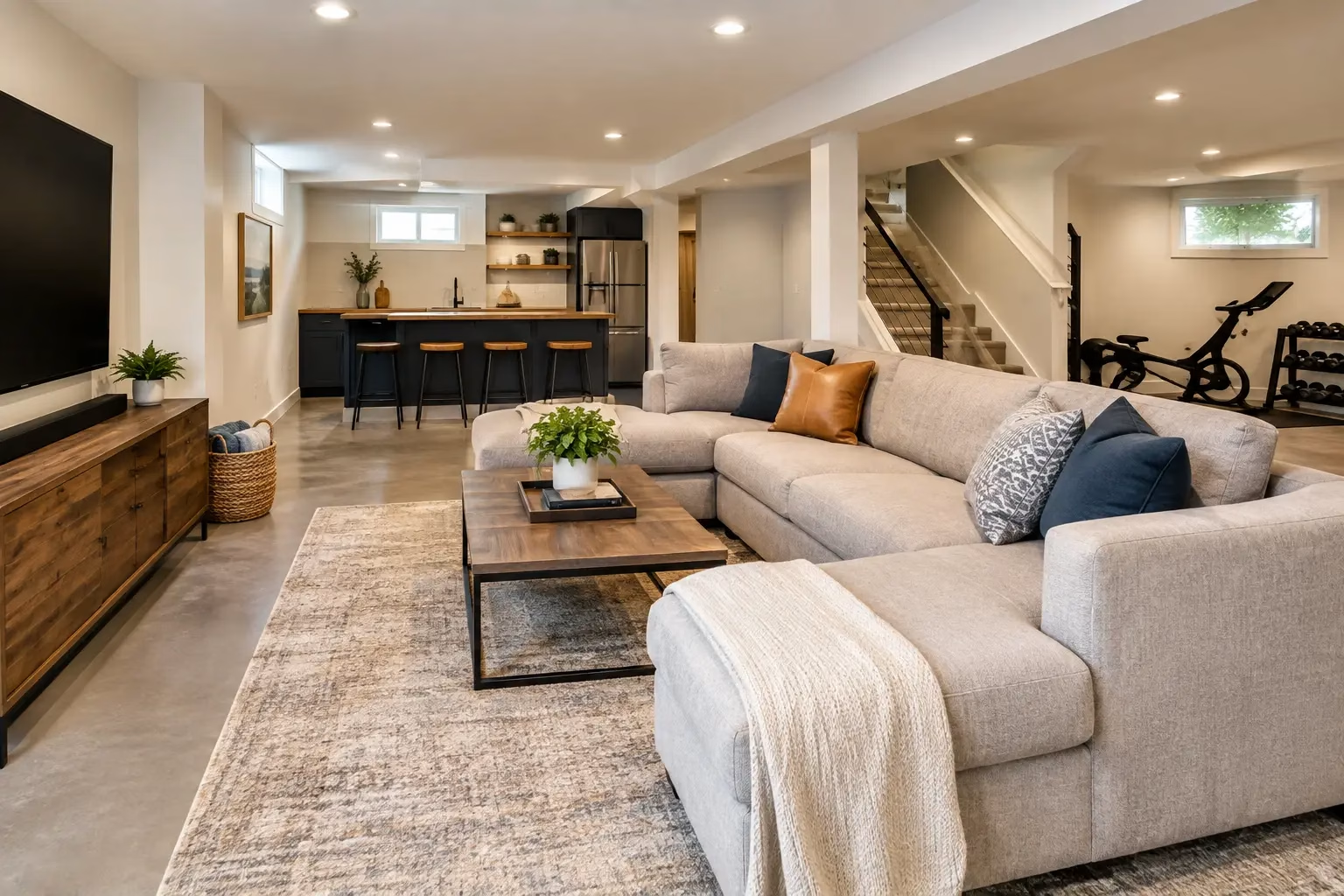
A basement floor makeover is rarely just about covering gray concrete. It is about turning the coldest, most overlooked room in the house into space you can actually use – without hiding cracks, trapping moisture, or choosing a finish that cannot keep up with real family life.
Whether your basement is becoming a home gym, recreation room, workshop, laundry area, or finished living space, the floor has to start with the slab beneath it. Concrete can look solid while still carrying moisture, surface dust, old adhesive, pitting, or cracks that compromise the finish above. The best results come from addressing those conditions first, then installing a coating system designed for the way basements behave.
Start Your Basement Floor Makeover Below the Surface
Basements have a different set of demands than main-floor rooms. They sit against soil, experience cooler temperatures, and can be affected by seasonal ground moisture. In Canadian homes, freeze-thaw movement and changing humidity can add stress to an already imperfect concrete slab.
That is why a lasting makeover should not begin with a decorative finish. It begins with professional concrete evaluation and preparation. We look for cracks, spalling, pitting, previous coating failure, contamination, and signs that moisture may be moving through the slab. A floor can only perform as well as the surface it is bonded to.
Surface preparation is the stage many quick fixes skip. Diamond grinding creates the proper concrete profile for adhesion while removing weak material, old coatings, and surface contaminants. Cracks and damaged areas are repaired before the coating is applied, not disguised beneath it. This creates a more uniform surface and helps prevent small flaws from becoming visible problems later.
Moisture also deserves a practical conversation. A coating can help protect the concrete surface and make cleanup easier, but it cannot solve an active water intrusion issue caused by foundation leaks, failed drainage, or flooding. If water is entering the basement, address that source before investing in the floor. When the slab is structurally sound and dry enough for coating, a professionally installed system can provide a dramatic transformation.
Choose a Finish for How You Will Use the Room
A basement used for storage has different needs from one used as a family room. Before selecting a colour blend or finish style, think about traffic, furniture, pets, exercise equipment, and how much natural light reaches the space.
A full-flake broadcast finish is a strong choice for many basement projects. Decorative flakes are broadcast across the coated floor to create a textured, multi-toned appearance that helps camouflage dust, small marks, and everyday wear. It gives the slab a finished look without the maintenance concerns that come with grout lines or seams.
For a workshop, hobby room, or utility space, the appeal is as practical as it is visual. A coated concrete floor is easier to sweep, easier to wipe down after spills, and far less likely to shed concrete dust onto stored items. In a family recreation area, the same system creates a clean, cohesive foundation for furniture, rugs, and play equipment.
Colour selection matters more in a basement than many homeowners expect. Lighter neutral blends can make a low-light room feel more open, while medium blends are often forgiving in laundry rooms, entry areas, and active multipurpose spaces. Darker finishes can look sharp, but they may show dust more readily if the room receives little daylight. We help homeowners choose a finish that works with the room rather than simply following a showroom sample.
Why Conventional Basement Coatings Can Fall Short
Traditional epoxy has a long history in concrete coating, but basement conditions expose its limitations. Extended cure times can delay a renovation, and a poor bond to improperly prepared concrete may eventually show up as peeling, bubbling, or discolouration. A basement is not the place to gamble on surface-level preparation.
Our FloorX2 Fusion+Nano® system is built around advanced nanospartic coating technology and a multi-layer installation process. It is designed for strong adhesion, fast curing, and dependable resistance to everyday moisture exposure, stains, abrasion, and household traffic. That means a basement floor can be professionally transformed on a schedule that keeps the rest of your renovation moving.
Fast installation is useful, but it is not a substitute for careful work. The advantage comes from combining proper grinding, concrete repair, appropriate base coats, full-flake broadcast application, and protective top layers into one coordinated system. The result is a floor that looks intentional, not like an unfinished slab with a coating rolled over the top.
Plan Repairs Before the Finish Goes Down
Cracks are common in basement slabs, and not every crack means the foundation is failing. Some are normal signs of concrete shrinkage or settling. Still, they should be evaluated and repaired before coating because they can collect dirt, interrupt the appearance of the finish, and remain vulnerable to movement.
Spalling and pitting require the same attention. These damaged areas can develop after years of moisture, salt exposure near basement entries, impact damage, or weak original concrete. Repairing them creates a smoother, more stable surface and prevents the finished floor from highlighting every defect.
There is a trade-off to understand here: a professionally repaired concrete floor can look remarkably uniform, but concrete remains concrete. Large structural movement, active water issues, or serious slab failure may require additional building or foundation work before a coating system is appropriate. An honest assessment protects both the floor and your renovation budget.
Build a Basement That Is Easier to Live With
The biggest benefit of a basement floor makeover is often what happens after installation. The room feels cleaner because bare concrete is no longer producing dust. Storage bins, shelving, and furniture look more at home on a finished surface. Cleanup becomes simpler when muddy shoes, pet accidents, craft spills, or laundry-room splashes can be wiped up rather than absorbed into porous concrete.
A durable coated floor also gives you more flexibility. A basement that once served only as storage can become a workout zone, a games room, a home office, or a polished utility area. You do not need to decide that the room is formal living space for the floor to be worth improving. Even a well-organized storage basement benefits from a clean, protected slab.
If your project includes a basement walkout or concrete steps, consider the transition areas too. Treating connected concrete surfaces can create a more consistent look while protecting the areas that see the most tracked-in dirt and moisture. The right scope depends on the layout, exposure, and intended use of each space.
Protect the Investment With Professional Installation
A basement floor is not a surface to redo every few years. Professional installation provides the preparation, repair, material selection, and application control needed for a finish that is built to stay put. At Garage Floors 4 Less, our FloorX2 Fusion+Nano® system is backed by our 15-year all-inclusive transferable guarantee, giving homeowners confidence that their floor is protected beyond installation day.
The most successful basement transformations begin with a clear look at the slab you have, not the room you wish it already were. Try our Floor Visualizer to explore finish options, or request a free estimate and let us help you create a basement floor that makes the whole space more useful.