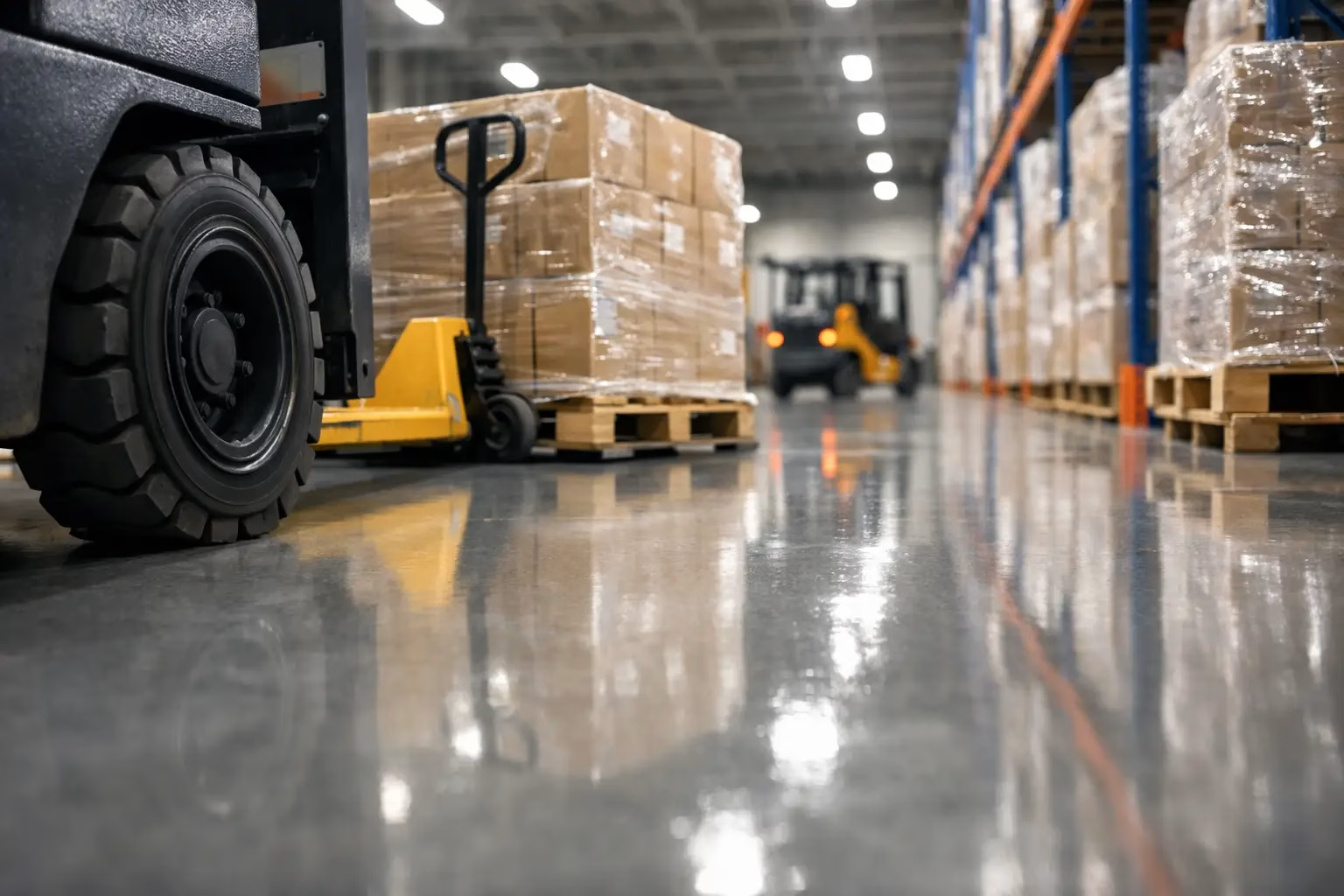
A warehouse floor coating is tested long before it looks worn out. Forklifts turn in the same lanes, pallets drag across loading areas, wheels carry in water and road salt, and dropped tools strike the slab. If the coating was selected only for its initial appearance – or applied over poorly prepared concrete – those daily forces can lead to peeling, tire marks, exposed concrete, and avoidable shutdowns.
For warehouse owners and operators, the goal is not simply to make a concrete floor look better. It is to create a cleanable, safer, more durable work surface that supports the way the facility actually operates. That means starting with the concrete, choosing the correct coating build, and treating repairs and moisture as part of the job rather than inconvenient extras.
Why Warehouse Floors Fail Before Their Time
Bare concrete is hard, but it is not invincible. It is porous, which allows oils, chemicals, moisture, and contaminants to penetrate its surface. Repeated traffic can wear away the top layer, while impact damage, shrinkage cracks, and spalling create rough areas that collect debris and make cleaning more difficult.
A coating can protect the slab, but only when it bonds properly. Many floor failures begin underneath the finished surface. Old sealers, curing compounds, tire residue, paint, dust, and weak concrete prevent a coating from anchoring to the substrate. Applying material over these conditions may produce a polished-looking floor for a short time, yet the first demanding season can reveal bubbling, delamination, or peeling.
Moisture is another common concern, particularly in Canadian facilities exposed to freeze-thaw cycles, wet vehicles, snowmelt, and changing humidity. Water vapour moving through the slab can compromise a coating system that was not designed or installed with the concrete’s condition in mind. A professional assessment identifies these risks before the floor is covered.
What a Warehouse Floor Coating Must Handle
Not all warehouse environments put the same demands on a floor. A light-storage facility, automotive parts warehouse, distribution centre, commercial garage, and manufacturing space may all need different levels of impact resistance, texture, chemical resistance, and thickness. The right solution depends on traffic patterns, loads, cleaning procedures, exposure to fluids, temperature changes, and the condition of the existing slab.
A well-specified system should protect against the challenges that matter most in your operation:
- Abrasion from forklifts, pallet jacks, carts, and rolling equipment
- Impact from dropped inventory, tools, and metal components
- Stains from oils, fluids, dirt, and tracked-in contaminants
- Moisture exposure around entrances, bays, and loading zones
- Surface wear in travel lanes, turning points, and work areas
Slip resistance also deserves careful consideration. A highly textured finish can add traction in wet zones, but excessive texture can make cleaning more labour-intensive or interfere with some wheeled equipment. This is why finish selection should be based on the space’s day-to-day use, not a one-size-fits-all recommendation.
Preparation Is the Performance Step Most People Miss
The best coating material cannot correct poor surface preparation. Before installation, our team evaluates cracking, pitting, spalling, contamination, and prior coatings. Damaged areas need professional repair so the finished surface is stable and consistent, rather than simply hiding problems that continue beneath it.
Mechanical preparation is essential because it creates the profile needed for strong adhesion. The process removes weak concrete and surface contaminants while opening the pores of the slab. It is more demanding than a quick acid wash or a basic clean-and-coat approach, but it is the foundation of a floor designed to stay bonded under traffic.
Cracks should also be addressed realistically. Concrete naturally moves, and not every crack can be made permanently invisible. However, properly repairing cracks, pits, and spalled areas before coating improves appearance, reduces places for moisture and debris to collect, and gives the system a more uniform base. In active warehouse areas, that attention to detail can prevent a small defect from becoming a larger maintenance issue.
Why Conventional Epoxy Is Not Always the Best Choice
Epoxy has a long history in commercial flooring, and it can be suitable for certain indoor applications. However, conventional epoxy has limitations that warehouse operators should understand. It generally cures more slowly, can be sensitive to installation conditions, and may yellow or discolor with UV exposure near overhead doors, windows, or exterior-adjacent work areas.
At Garage Floors 4 Less, we use advanced FloorX2 Fusion+Nano® polyaspartic and nanospartic coating technology for projects that need faster return to service and high-performance protection. These systems are designed for strong adhesion, excellent durability, UV stability, and resistance to hot-tire pickup. They also perform well in the temperature swings and freeze-thaw conditions common across Canada.
Fast curing matters in a warehouse because a prolonged floor project affects receiving, storage, equipment movement, staffing, and customer service. A professionally planned system can often be installed in one day, minimizing interruption without treating speed as an excuse to skip the preparation work that makes the coating last.
Choosing the Right Finish for the Operation
A warehouse floor does not have to look industrial in the unattractive sense of the word. A professional coating creates a brighter, cleaner surface that can improve the presentation of a facility while making it easier to see debris, leaks, and safety concerns. That is especially valuable in showrooms, customer-facing service areas, and mixed-use commercial spaces.
For many facilities, a full-flake broadcast finish is a practical choice. Decorative flakes create visual depth, help disguise dust and minor scuffs, and can be paired with a protective topcoat for a durable, easy-to-maintain surface. Colour selection can also support the space: lighter finishes improve brightness, while blends with varied tones are more forgiving in areas where traffic is constant.
The final choice should balance appearance with function. A high-gloss surface may look sharp in a showroom, while a textured, more understated finish may make better sense near bays, entrances, or areas that regularly become wet. The best floor is one employees can work on confidently and managers can maintain without excessive downtime.
Plan for Traffic, Not Just Square Footage
Two warehouses with the same floor area can require very different coating approaches. A facility with occasional foot traffic has different needs than one with loaded forklifts running the same route all day. Turning zones, dock entrances, battery charging areas, wash zones, and workstations often deserve special attention because they concentrate wear.
Before installation, map where the floor takes the most abuse. This allows the coating design and repair work to focus on real operating conditions. It also helps schedule the project around access requirements. In some cases, completing the floor in phases is the practical answer when inventory or equipment cannot be moved all at once.
A cheaper coating can seem appealing when a large area is involved, but replacement costs quickly change the calculation. When a floor peels, repairs are rarely limited to applying another coat. The failed material must be removed, the concrete must be prepared again, and operations may be disrupted a second time. Investing in correct preparation and a high-performance system protects both the slab and the budget.
Maintenance That Keeps the Coating Working
A coated warehouse floor is easier to maintain than bare concrete, but it still needs routine care. Sweep or dust mop abrasive grit before it acts like sandpaper under wheels. Clean spills promptly, especially oils and chemicals, and use cleaning products suited to the coating system. Avoid harsh tools or cleaners that can dull the finish over time.
It also pays to inspect high-traffic lanes and impact-prone areas regularly. Early attention to a damaged spot helps preserve the surrounding coating and keeps moisture from finding its way into the concrete. A floor is an operating surface, not a set-it-and-forget-it purchase, but the right system makes ongoing maintenance far more manageable.
Our FloorX2 system is backed by our 15-year all-inclusive transferable guarantee, giving property owners added confidence that their investment is built around long-term performance rather than a short-term cosmetic fix.
If your warehouse concrete is stained, cracked, dusty, or showing signs of coating failure, start by seeing what the finished space could become with our Floor Visualizer. When you are ready, request a free estimate and let us assess the slab, the traffic, and the finish that fits your operation.