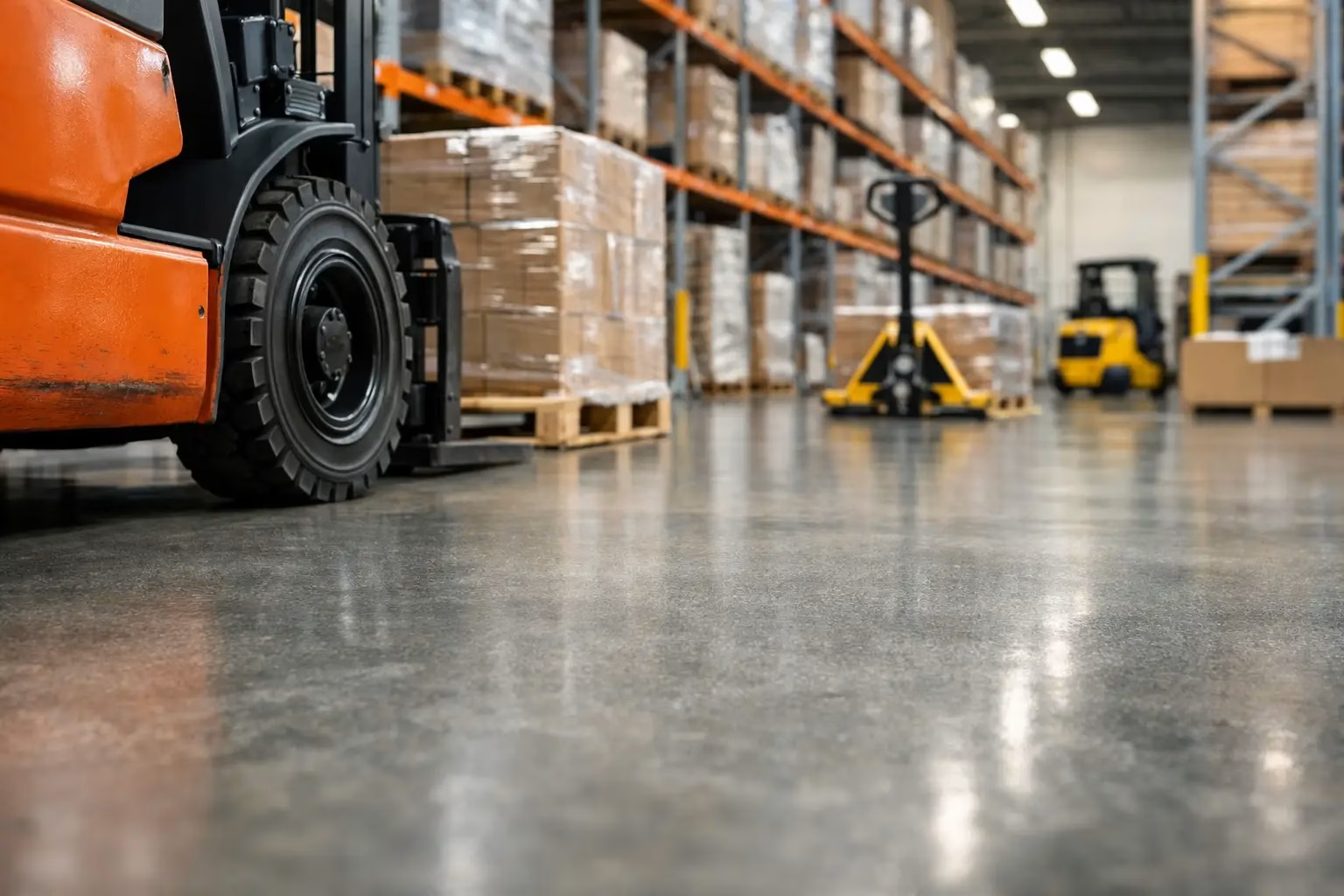
A warehouse floor has to do more than look clean. It carries forklifts, pallet jacks, rolling carts, dropped inventory, chemical drips, and constant foot traffic – often while dealing with moisture moving through the concrete slab. The best warehouse flooring options are the ones that match those conditions before installation begins, not the ones that simply look tough on a sample board.
For many facilities, bare concrete is the starting point and the source of the problem. It dusts, absorbs spills, develops cracks and pits, and becomes harder to clean as traffic wears away its surface. A professionally prepared coating system can turn that slab into a cleaner, brighter, more dependable work surface, but material selection and concrete preparation determine whether it lasts.
What a Warehouse Floor Must Handle
Warehouse use varies widely. A light-duty storage space with carts and boxed inventory has different demands than a distribution center running loaded forklifts all day. Before choosing a system, consider traffic volume, point loads, impact exposure, chemicals, moisture conditions, required downtime, and cleaning practices.
Concrete condition matters just as much. Cracks, spalling, pitting, oil contamination, and weak surface paste cannot be hidden successfully with a coating. If the slab is not mechanically prepared and repaired, even a premium finish can lose adhesion where the concrete fails underneath it.
Appearance also has a practical role. A brighter, consistent floor improves visibility, helps crews spot spills, and gives customer-facing warehouses or showrooms a more professional finish. The right system should support daily operations without creating unnecessary maintenance or shutdowns.
Best Warehouse Flooring Options Compared
Polyaspartic and Nanospartic Coating Systems
For many warehouses, advanced polyaspartic and nanospartic systems offer the strongest balance of speed, appearance, and long-term performance. These coatings cure far faster than conventional epoxy, allowing qualified projects to be installed with minimal interruption. They also offer excellent resistance to abrasion, stains, moisture exposure, and temperature changes.
At Garage Floors 4 Less, our FloorX2 Fusion+Nano® system is designed around multiple protective layers rather than a basic single-coat approach. It can be finished as a full-flake broadcast floor for added texture, durability, and visual consistency, or specified in a finish that suits the working environment. The result is a floor that is easier to clean and built to stand up to demanding concrete-slab conditions.
This option is especially useful where a facility cannot afford a lengthy closure. Fast cure times can shorten the period between preparation and return to service, though exact scheduling depends on the floor’s condition, repairs, temperature, and the size of the project.
Epoxy Coatings
Epoxy has a long history in commercial flooring because it can create a hard, protective film and provide a clean finished appearance. It may still be considered in controlled indoor environments where UV exposure is limited, downtime is available, and the application is suited to the building’s operating conditions.
Its limitations become clear in more demanding settings. Conventional epoxy can take longer to cure, may discolor under UV exposure, and can be more vulnerable to peeling when moisture issues or poor preparation are involved. It can also struggle with thermal movement and repeated hot-tire exposure in mixed-use warehouse and commercial garage environments.
That is why we do not position conventional epoxy as the preferred solution for high-performance concrete floors. The best epoxy for your garage is not epoxy, and the same thinking often applies to warehouse areas exposed to traffic, temperature changes, and demanding service. Advanced polyaspartic and nanospartic technologies provide a more practical path when performance and downtime both matter.
Polished Concrete
Polished concrete can be a smart choice for large indoor warehouses with sound slabs, dry conditions, and a preference for an industrial appearance. The process densifies and refines the concrete surface, reducing dusting while creating a reflective finish that can improve light distribution.
However, polished concrete is not a cure for damaged concrete. Significant cracks, pitting, spalling, and repairs can remain visible. It may also be slippery when wet unless traction is addressed, and it does not offer the same barrier against oils, chemicals, and contaminants as a high-performance coating. For facilities where spill resistance and easy cleanup are priorities, a coated system is often the better fit.
Urethane Cement and Heavy-Duty Mortar Systems
In food processing, manufacturing, or facilities exposed to hot washdowns, thermal shock, and aggressive chemicals, urethane cement or heavy-duty mortar systems may be appropriate. These systems are engineered for extreme environments and can tolerate conditions beyond what a typical decorative coating is expected to handle.
The trade-off is cost, installation complexity, and finish appearance. They are not automatically the right answer for a standard storage warehouse, commercial garage, or showroom. Specifying an industrial-grade system where it is not needed can add expense without delivering meaningful operational value.
Interlocking Tiles and Mats
Tiles and mats can provide a quick surface upgrade for a small warehouse zone, tool room, or temporary workspace. They may reduce fatigue in standing areas and can be replaced locally if damaged. But seams can collect dirt, trap moisture, and complicate rolling traffic. Heavy point loads and forklifts can also shift or damage products not designed for industrial use.
They work best as targeted solutions, not as a substitute for repairing and protecting a deteriorating concrete slab across an active warehouse.
Why Preparation Decides the Result
A warehouse floor coating is only as reliable as its bond to the concrete. Surface preparation should begin with an assessment of moisture, contamination, damage, and the concrete’s existing strength. Oil-soaked areas, failed coatings, weak concrete, and deteriorated joints need specific attention before a new system goes down.
Mechanical grinding creates the proper surface profile for adhesion. This is very different from simply acid etching or rolling a coating over a cleaned slab. Cracks, pits, and spalled areas should be repaired with compatible materials, then blended into the preparation process so the finished floor has a stable base.
Skipping these steps may save time at the beginning, but it often leads to peeling, bubbling, delamination, and repeated repairs later. For an operation that depends on continuous access to its floor, that is a costly shortcut.
Choosing the Right Finish and Texture
A smooth floor may be easier to sweep, but a warehouse also needs traction where water, snow, oils, or other liquids may be present. Full-flake broadcast systems add texture and help conceal minor dirt between cleanings, while still creating a finished appearance suitable for customer-facing spaces.
Color selection should be functional. Medium-toned blends can hide routine dust and tire marks better than solid light colors, while lighter finishes can improve visibility in darker buildings. Safety markings, traffic lanes, and work-zone boundaries can also be planned around the flooring design instead of added as an afterthought.
The right choice depends on how the space is used. A forklift corridor, shipping area, commercial service bay, and warehouse showroom may all need different levels of texture, chemical resistance, and visual detail.
A Better Long-Term Investment
The least expensive quote is rarely the least expensive floor over its full service life. A coating that fails early can require removal, concrete repair, lost productivity, and reinstallation. A professionally installed system costs more than a quick roll-on application because it accounts for preparation, repairs, material performance, and the details that protect adhesion.
Our FloorX2 Fusion+Nano® installations are backed by our 15-year all-inclusive transferable guarantee. That protection reflects the value of using a proven multi-layer system and treating the concrete beneath it as seriously as the finished surface above it.
A warehouse floor should make work easier, not become another maintenance problem. Try our Floor Visualizer to explore finish possibilities, or request a free estimate to discuss the traffic, slab condition, and performance requirements of your space.