A garage floor can look finished on installation day and still fail when the first hot tires, winter road salt, or concrete moisture put it under pressure. That is why the choice between polyurea versus polyaspartic coatings is more than a material debate. It affects installation timing, color stability, adhesion, repairability, and how your floor performs years after the crew leaves.
For homeowners comparing advanced garage-floor systems, the short answer is this: both materials can outperform conventional epoxy when they are professionally specified and installed. But they are not interchangeable. Pure polyurea is known for exceptionally fast cure times and toughness, while polyaspartic coatings offer more controlled working time and strong UV stability. The best result often comes from a system that uses each material where it performs best, rather than treating one coating as a cure-all.
What Is the Difference Between Polyurea and Polyaspartic?
Polyurea is a high-performance elastomer created when an isocyanate reacts with an amine resin. It is valued for rapid curing, flexibility, chemical resistance, and impact resistance. Some polyurea formulations can set in seconds, which is useful in specialized industrial, waterproofing, and spray-applied applications.
That speed can also be a challenge on a decorative garage floor. A coating that cures too quickly gives installers less time to spread it evenly, manage edges, apply decorative flakes, and maintain a consistent finish. The formulation, ambient temperature, humidity, and installer experience all matter.
Polyaspartic is a type of aliphatic polyurea chemistry designed to slow down the reaction. In practical terms, it gives a professional crew more working time than a fast-set pure polyurea while retaining many of the qualities homeowners want from a premium floor coating: fast return to service, abrasion resistance, chemical resistance, and excellent resistance to UV-related yellowing.
This is why polyaspartic has become a leading choice for garages, workshops, showrooms, and commercial spaces that need a decorative, full-flake finish without a long shutdown. It can often be installed in one day, then returned to light use quickly once the system has cured.
Polyurea Versus Polyaspartic Coatings for Garage Floors
A garage is not a warehouse loading dock, but it is far from a gentle environment. Tires bring in water, road salt, grit, and oils. Lawn equipment leaks fuel. Concrete moves with seasonal temperature changes. A quality floor must handle those realities while still looking good under bright daylight.
Cure Speed: Fast Is Only Helpful When It Is Controlled
Pure polyurea cures extremely fast. In the right application, that is a major advantage. It may help reduce downtime and can create a durable protective membrane quickly.
For a garage-floor coating, however, speed must be balanced with application control. Decorative full-flake systems require the base coat to remain workable long enough for complete flake broadcasting. The coating also needs to wet out the prepared concrete properly and allow the installer to maintain a uniform finish at walls, steps, and transitions.
Polyaspartic coatings provide a more manageable application window. That gives professional installers time to build a consistent floor system without sacrificing the fast cure that makes one-day installation possible. A floor should not only cure quickly. It should be installed correctly before it cures.
UV Stability: A Clear Advantage for Polyaspartic
Sunlight can expose weak coating chemistry quickly. Some materials discolor, amber, or lose visual consistency when exposed to UV rays, particularly near open garage doors, windows, patios, and exterior-facing steps.
Aliphatic polyaspartic coatings are widely selected for their UV stability. They help a full-flake floor retain its intended color and finish rather than developing the yellowed appearance many homeowners associate with aging conventional epoxy. This matters for garages that double as hobby spaces, home gyms, workshops, or extensions of the living area.
Pure polyurea systems vary. Aromatic polyurea is generally less UV stable and may require a UV-resistant topcoat when used in sun-exposed areas. Aliphatic formulations offer better color stability but can be more specialized and costly. The label alone does not tell the whole story. You need to know the chemistry of the complete system, including its topcoat.
Flexibility and Concrete Movement
Concrete is hard, but it is not motionless. It expands, contracts, and develops small cracks over time. A coating with some flexibility can better accommodate minor movement than a brittle surface film.
Polyurea is known for elasticity, which can make it valuable in applications where movement and impact are significant concerns. Polyaspartic systems also provide useful flexibility, particularly when combined with the right base coat and prepared substrate.
Neither material should be treated as a substitute for crack repair. Active cracks, spalling, pitting, and failed concrete need professional attention before coating begins. Coating over damage without repairing it first may hide the problem temporarily, but it will not stop the slab from telegraphing defects through the new surface.
Moisture Resistance Depends on Preparation
Homeowners often hear that polyurea or polyaspartic coatings are moisture resistant and assume they can be applied over any slab. That is not how lasting floor systems work.
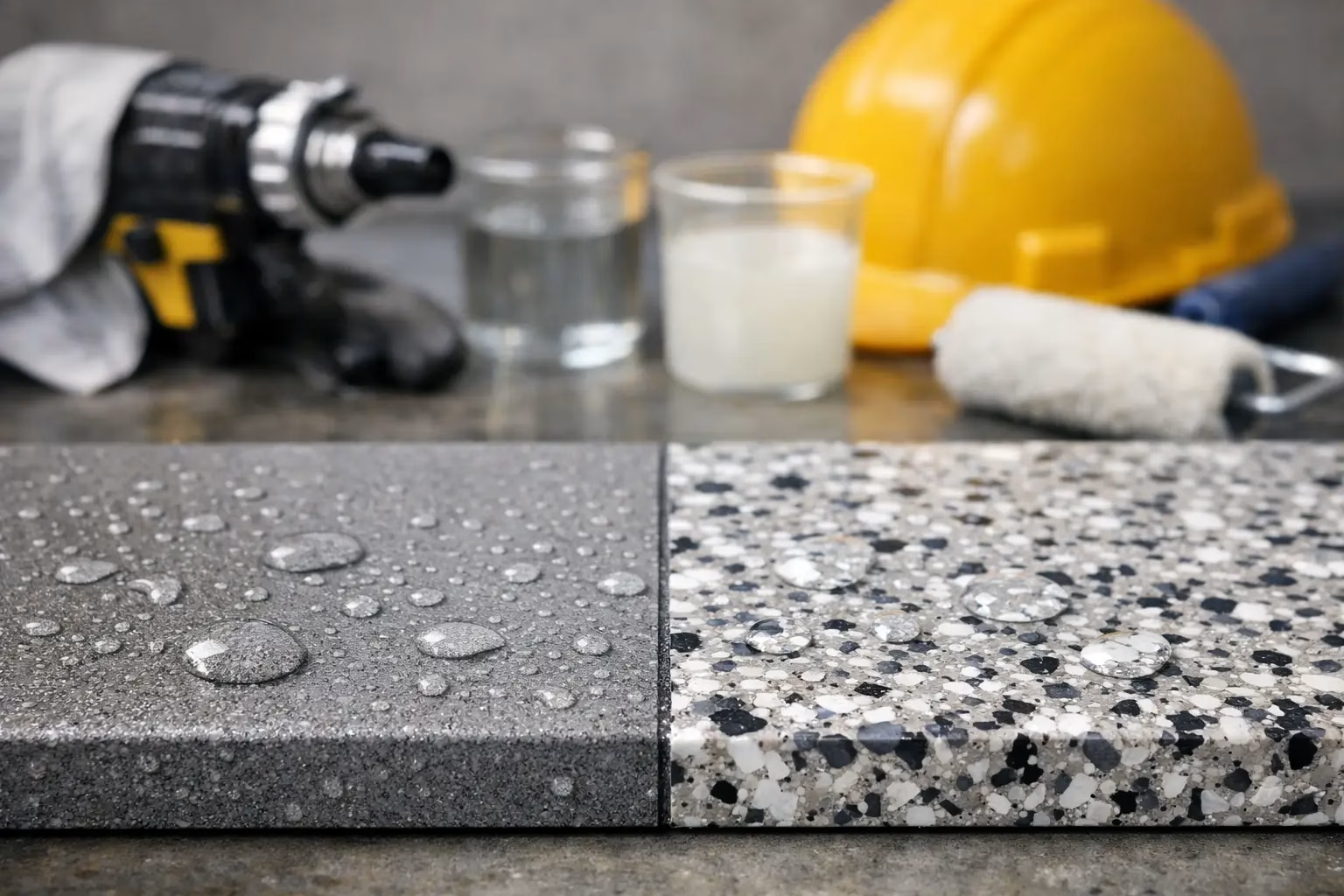
Concrete can hold moisture vapor beneath the surface. If the slab is poorly prepared, contaminated with oil, or affected by excessive moisture transmission, even a premium coating can lose adhesion. Peeling is rarely just a coating problem. It is often a preparation problem.
At Garage Floors 4 Less, we focus on mechanical surface preparation, concrete repair, and a multi-layer system designed for the actual condition of the floor. Diamond grinding creates the proper concrete profile for bonding. Cracks and damaged areas are addressed before the decorative layers go down. This is the difference between covering concrete and restoring it.
Why the Best Garage Floors Use a Complete System
Choosing between a bucket labeled polyurea or polyaspartic misses the larger issue: floor performance comes from the complete coating assembly. The base layer, decorative broadcast, protective topcoat, concrete profile, repair materials, and installation conditions all work together.
Our FloorX2 Fusion+Nano® system is designed around that principle. It combines advanced polyaspartic and nanospartic technology to create a high-performance finish that is built for fast installation, UV exposure, hot-tire pickup resistance, chemical spills, abrasion, and changing seasonal conditions.
A full-flake broadcast layer does more than create a finished look. It adds visual depth, helps disguise small amounts of dust and everyday debris, and contributes to a more consistent, textured surface. The protective clear coat then helps make the floor easier to clean while defending against stains and wear.
This approach is a major step beyond a conventional epoxy kit. Epoxy has a long history in garages, but it is often slower to cure and more vulnerable to UV discoloration. Lower-grade epoxy systems can also struggle with hot-tire pickup, moisture-related adhesion issues, and the realities of a slab exposed to freeze-thaw cycles. The best epoxy for your garage is not epoxy.
Which Coating Is Right for Your Project?
Pure polyurea may be a practical choice for specialized industrial uses, high-speed applications, or areas where exceptional flexibility is the primary requirement. It can be an impressive material when selected for the right environment and installed by technicians equipped to handle its rapid reaction time.
Polyaspartic is often the more natural choice for residential garage floors because it brings together controlled application, fast curing, visual quality, UV stability, and long-term protection. For a garage, basement, workshop, patio, or showroom, that balance matters as much as raw strength.
The right answer can also vary by concrete condition. A clean, newer slab needs a different approach than a garage with oil contamination, deep cracks, spalling, old coating failure, or moisture concerns. A professional assessment should identify those issues before a price or product recommendation is made.
Look Beyond the Coating Name
When comparing quotes, ask how the concrete will be prepared, how cracks will be repaired, whether the system includes a full-flake broadcast, and what topcoat protects the finished surface. Ask how long the crew expects the floor to remain out of service and what the warranty actually covers.
We back our FloorX2 system with a 15-year all-inclusive transferable guarantee because a garage floor should be a long-term improvement, not another project on the future repair list. The goal is a clean, durable surface that makes parking, storing, working, and maintaining your space easier.
See how your garage could look with our Floor Visualizer, or request a free estimate for a coating system built around your concrete, your space, and how you use it.