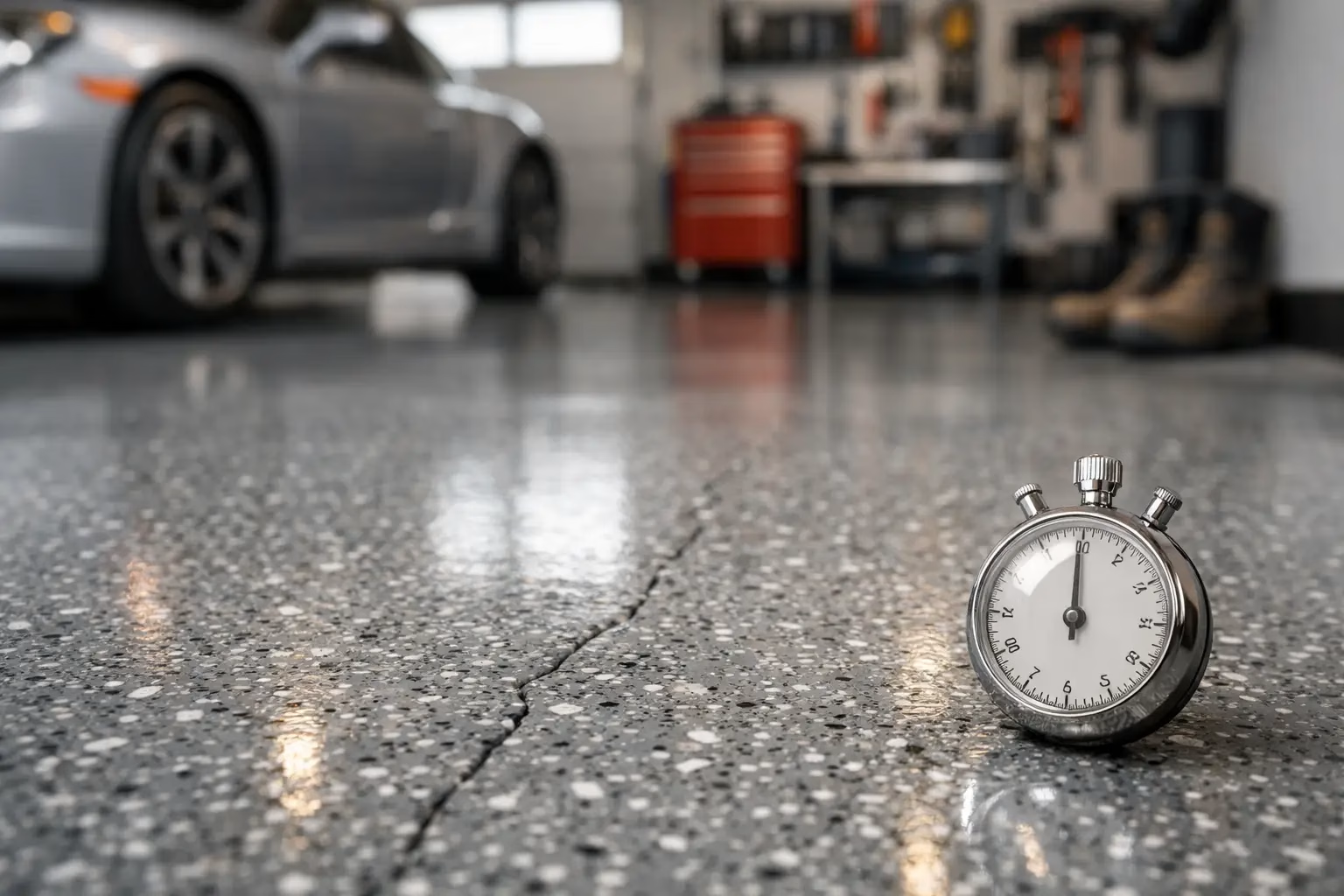
A garage floor can look great on installation day and still fail early if the coating was applied over weak, contaminated, or moisture-affected concrete. So, how long do garage coatings last? The honest answer depends less on the color or shine of the finish and more on what is underneath it: concrete condition, surface preparation, coating chemistry, installation quality, and how the space is used.
For a professionally installed high-performance system, a garage coating should provide many years of dependable protection and a consistently finished appearance. At Garage Floors 4 Less, our FloorX2 Fusion+Nano® systems are backed by a 15-year all-inclusive transferable guarantee because they are designed as complete flooring systems, not a quick cosmetic layer over bare concrete.
How Long Do Garage Coatings Last in Real Conditions?
A basic DIY coating may begin to show problems within a few years, particularly where tires, road salt, moisture, dropped tools, and changing temperatures are part of normal life. Peeling, hot-tire pickup, yellowing, worn traffic paths, and staining often point to a coating that was not suited to the slab or was not properly bonded to it.
Traditional epoxy has a long history in garages and commercial spaces, and a professionally installed epoxy floor can last longer than a do-it-yourself kit. However, epoxy is not our preferred solution for residential garages. It can be slower to cure, less UV stable, and more vulnerable to discoloration and performance issues when conditions are not ideal.
Advanced polyaspartic and nanospartic systems are built for a tougher job. When installed over properly prepared concrete, a full-flake FloorX2 Fusion+Nano® floor is designed to stand up to daily vehicle traffic, moisture, de-icing salt, impacts, household chemicals, and northern freeze-thaw conditions for the long term. The practical goal is not simply to make a floor last until the next renovation. It is to protect the concrete and keep the garage usable, clean, and attractive year after year.
The Biggest Factor Is Not the Coating – It Is the Concrete Prep
Many coating failures start before the coating is ever mixed. Concrete may look solid while hiding oil contamination, previous sealers, weak top layers, moisture vapor movement, surface cracking, or pitting. If those issues are covered instead of corrected, even a premium coating may have trouble achieving the bond it needs.
Professional preparation changes the equation. We mechanically prepare the slab to create the right surface profile, repair cracks and damaged areas as needed, and build the floor in layers. This is very different from cleaning a garage floor with acid, rinsing it, and rolling on a coating from a hardware-store kit.
A properly prepared slab gives the coating a stable foundation. It also helps prevent the familiar problems homeowners associate with failed garage epoxy: lifting at the edges, tire marks pulling up the finish, flakes separating from the surface, and moisture-related bubbling.
Cracks and concrete damage affect lifespan
Coatings protect concrete, but they do not make existing slab damage disappear on their own. Cracks can move, spalled areas can continue to break down, and pitted concrete can create weak points beneath a finish. Addressing those concerns before coating installation is one of the best ways to avoid premature wear.
The right repair approach depends on the damage. A small surface crack is not the same as an active structural crack, and localized pitting is not the same as widespread concrete deterioration. A professional assessment helps determine whether the floor is ready for coating and what repair work will deliver the most durable result.
Why Polyaspartic and Nanospartic Coatings Last Longer
The best epoxy for your garage is not epoxy. Our FloorX2 Fusion+Nano® system combines high-performance polyaspartic and nanospartic technology to address the conditions that make garage floors challenging.
These coatings cure much faster than conventional epoxy systems, allowing many residential projects to be completed in one day. Fast curing is convenient, but it is also part of a carefully controlled installation process that helps create a durable, multi-layer finish. Rather than waiting days to get your garage back, you can move toward a finished space with far less disruption.
UV stability is another advantage. Garage doors are open regularly, and sunlight can reach areas near the entrance. Conventional epoxy may amber or discolor over time, especially in lighter colors. Polyaspartic and nanospartic topcoats offer stronger resistance to UV exposure, helping the floor maintain its intended color and finish.
Hot tires are another common test. After driving, tires can transfer heat, moisture, and contaminants to the floor. Lower-quality coatings can soften or lose adhesion in those areas. A professionally installed FloorX2 system is engineered to resist hot-tire pickup so your garage floor remains intact where it sees the most vehicle traffic.
What Can Shorten the Life of a Garage Floor Coating?
Even an advanced coating benefits from reasonable care. The point is not to treat your garage like a museum. A quality floor should handle normal family life, vehicles, bikes, tools, workbenches, and storage. Still, a few conditions can shorten the service life of any coating.
Road salt and winter slush should not be allowed to sit indefinitely. The coating protects the concrete from much of that exposure, but regular rinsing or mopping prevents abrasive grit and residue from building up. Oil, fuel, and harsh chemicals should be wiped up promptly, especially if they are left in one area for extended periods.
Dragging sharp metal objects, dropping heavy equipment repeatedly in the same spot, and using aggressive abrasive cleaners can also mark a floor over time. For workshops and commercial garages, the coating system should be selected around actual traffic, equipment, and chemical exposure rather than a one-size-fits-all specification.
Moisture is the other major consideration. Moisture vapor can move through a concrete slab, and water can enter through cracks, perimeter gaps, or exterior drainage problems. That does not mean a garage cannot be coated. It means the concrete must be evaluated and the system must be installed with moisture conditions in mind.
How to Make Your Garage Coating Last
Maintenance is straightforward. Sweep away grit and debris regularly, then clean the floor with water and a mild cleaner when needed. A soft-bristle broom, microfiber mop, or squeegee is usually enough for routine care. Avoid harsh acids and highly abrasive products that can dull the topcoat.
Place protective pads beneath very heavy stationary equipment and use a mat under motorcycle kickstands or sharp metal stands when practical. If your garage doubles as a workshop, clean up metal shavings and abrasive dust instead of grinding them into the finish underfoot or under tires.
The bigger maintenance decision happens before installation: choose a system that suits the job. A decorative full-flake floor for a family garage has different needs than a warehouse aisle, auto shop, showroom, basement, patio, or commercial service bay. The right coating thickness, repair plan, topcoat, and finish texture all contribute to long-term performance.
A guarantee should cover more than the day of installation
A long-lasting floor should come with clear accountability. Our 15-year all-inclusive transferable guarantee on FloorX2 reflects our confidence in the complete system and our installation process. It also gives homeowners added value if they sell their property, because the protection transfers with the floor.
That guarantee is meaningful because it is paired with professional preparation, concrete repair capability, and coatings selected for real garage conditions. A low upfront price can look attractive, but replacing a peeling floor later is rarely the value-conscious choice.
A garage coating lasts longest when it is treated as a concrete restoration project, not a paint job. If you are ready to see what a finished floor could look like in your own space, try our Floor Visualizer or request a free estimate. We can help you choose a durable finish that makes the garage easier to clean, better protected, and far more enjoyable to use.