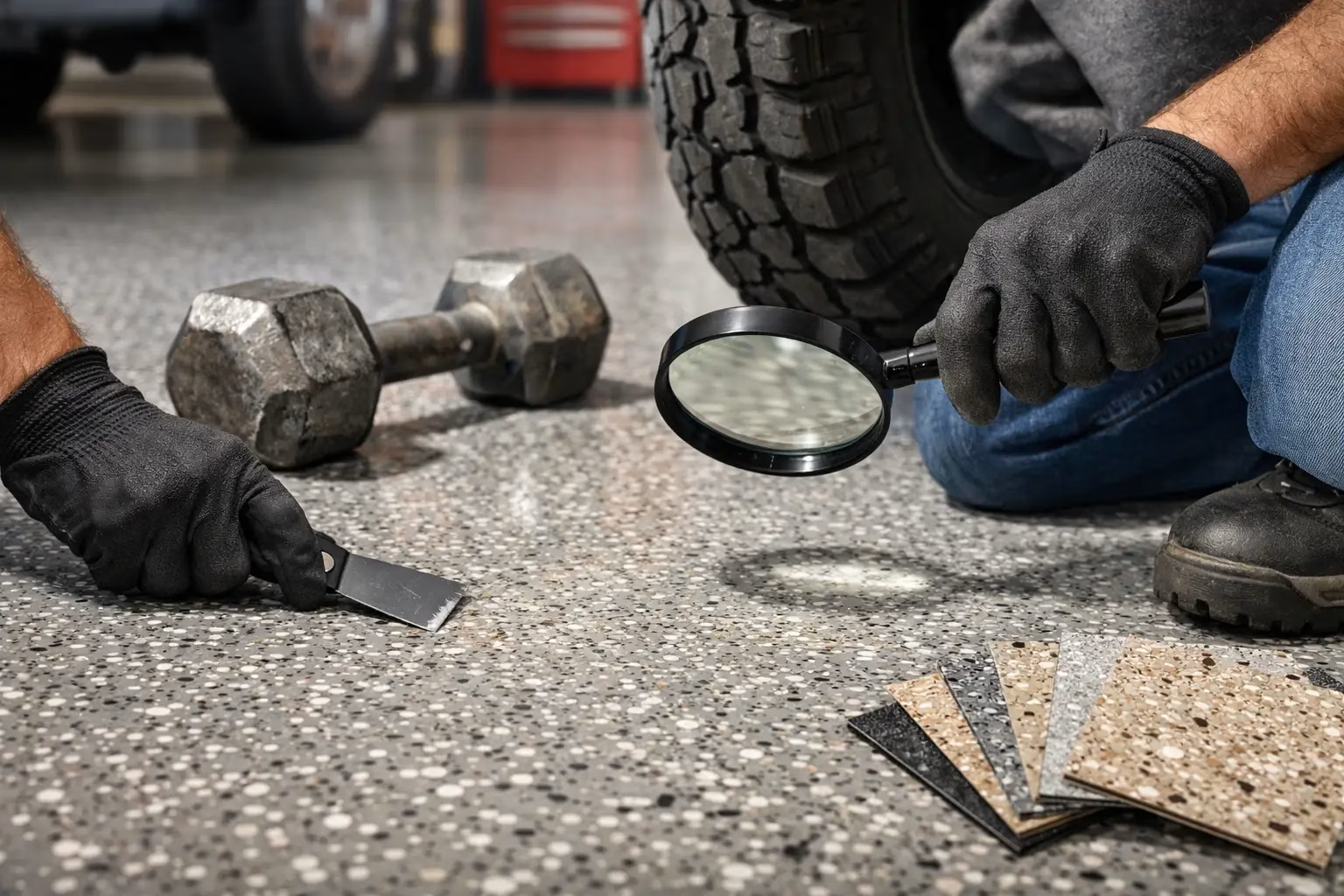
A garage floor can look excellent on installation day and still fail within a year. That is why polyaspartic coating reviews deserve more than a quick scan of star ratings and before-and-after photos. The useful reviews explain how the floor performs after winter road salt, summer heat, hot tires, dropped tools, vehicle traffic, and repeated cleaning.
For homeowners comparing garage floor options, the real question is not whether polyaspartic coatings can look great. They can. The question is whether the installer prepared the concrete correctly and used a complete system designed to stay bonded through demanding conditions.
What Polyaspartic Coating Reviews Should Tell You
A high rating is encouraging, but it does not automatically prove a coating system is right for your garage. Many reviews are posted within days of installation, when almost any new floor looks clean, glossy, and impressive. Look for comments from customers who have lived with the floor through a full cycle of weather and daily use.
The strongest reviews usually mention specific results: no peeling under parked vehicles, easy cleanup after spills, no yellowing near the garage door, and a finish that still looks consistent after a winter of salt and slush. They may also describe the installation process, including crack repair, concrete grinding, dust control, communication, and how quickly the garage was ready to use again.
Pay attention when reviewers mention that the contractor spent time preparing the slab. Surface preparation is not an optional extra. It is the foundation of coating performance. If a contractor applies material over weak, contaminated, or improperly profiled concrete, even a premium topcoat can lose adhesion.
Reviews should distinguish material from installation
Polyaspartic is a high-performance coating chemistry, but the word alone does not guarantee the same result from every installer. Formulas vary. So do base coats, moisture-control methods, flake systems, topcoats, and the level of concrete repair included in the project.
A review that says, “The crew ground the concrete, repaired the cracks, and explained every layer,” tells you much more than one that simply says, “Looks nice.” The first review points to the process behind a durable floor. The second only confirms an initial visual impression.
Why Polyaspartic Performs Better Than Conventional Epoxy
Epoxy has a long history in garages, and it can improve the appearance of bare concrete. But traditional epoxy also has familiar weaknesses: longer cure times, potential yellowing from UV exposure, and greater vulnerability to hot-tire pickup when the system or installation is not up to the job.
Polyaspartic coatings cure much faster and offer excellent UV stability. That matters in garages with windows, open doors, or direct sunlight at the entrance. A quality polyaspartic or nanospartic system is also designed to resist staining, abrasion, chemicals, and the heat transferred from tires after a drive.
At Garage Floors 4 Less, we go beyond a single-material promise. Our FloorX2 Fusion+Nano® system combines advanced polyaspartic and nanospartic technology with professional preparation and a full-flake broadcast finish. The result is a floor built to handle real garage use, not just photograph well for a showroom.
For Canadian homes, fast cure and strong adhesion are especially valuable. Freeze-thaw cycles, wet footwear, road salt, melting snow, and moisture vapor can expose weaknesses in poorly prepared concrete. A coating system must be selected and installed with those conditions in mind.
The Positive Signs in Real Customer Feedback
When reading reviews, prioritize feedback that reflects long-term ownership rather than the excitement of a new renovation. Certain themes are consistently meaningful because they connect directly to a floor’s performance.
Customers often notice the difference in cleanup first. A professionally coated full-flake floor creates a sealed, finished surface that is far easier to maintain than dusty, porous concrete. Salt residue, mud, oil drips, and household spills can be cleaned without fighting stains that have soaked deep into the slab.
Another valuable signal is praise for the crew’s preparation work. Concrete grinding creates the profile needed for coating adhesion, while crack and spall repairs improve both the appearance and the integrity of the finished surface. If reviews repeatedly mention a crew that did not rush this stage, that is a good sign.
You should also look for comments about scheduling and cure time. One-day installation can be a major advantage for homeowners who do not want their garage unusable for a week. Fast installation is only a benefit, though, when it is paired with the right products, temperature planning, and preparation standards.
Red Flags Hidden in Polyaspartic Coating Reviews
Not every negative review means polyaspartic is the wrong choice. It may reveal an avoidable installation issue, unrealistic expectations, or a floor that needed more repair than the customer realized. Still, recurring complaints should be taken seriously.
Peeling is the biggest warning sign. It is often connected to inadequate grinding, contamination left on the concrete, moisture concerns that were ignored, or a coating system applied too thinly. A reputable contractor should assess the slab before promising a specific outcome.
Slipperiness is another concern worth discussing honestly. Any hard floor can become slippery when water, snow, or oil is present. A full-flake broadcast finish provides more texture than a smooth painted floor, but traction depends on the selected finish, the conditions in the garage, and how the space is used. If you regularly bring in wet vehicles or use the floor as an entry point, ask about texture options during your consultation.
Price complaints also need context. A low-cost quote may exclude crack repair, proper mechanical preparation, a full broadcast of decorative flakes, quality topcoats, or meaningful warranty coverage. Comparing only the bottom-line number can lead to a system that looks less expensive because critical work has been left out.
Questions to ask before trusting a review
Before choosing an installer based on online feedback, ask what coating system was used, how the concrete was prepared, and whether repairs were included. Ask when the reviewer’s floor was installed and whether the company stands behind both materials and labor.
It is also reasonable to ask about hot-tire resistance, UV exposure, moisture-related risks, and the expected return-to-service timeline. Clear answers are a better indicator of professionalism than vague promises that a floor is “industrial grade.”
A Guarantee Changes the Value Conversation
A floor coating is not simply a color choice. It is protection for a concrete slab that may already have cracks, pitting, stains, or surface deterioration. The right system can make the garage easier to clean, more useful for projects, and far more finished as part of the home.
That is why warranty terms matter. Our FloorX2 Fusion+Nano® system is backed by a 15-year all-inclusive transferable guarantee. It is designed to give homeowners confidence that the investment is supported well beyond installation day, including if the home changes hands.
A transferable guarantee can also make more sense than a bargain coating that has no meaningful support if it peels, discolors, or fails early. Review the wording, ask what is covered, and make sure the company installing the floor will still be available to stand behind its work.
Is a Polyaspartic Garage Floor Worth It?
For a homeowner tired of bare concrete dust, old paint, peeling epoxy, salt stains, or a garage that never feels finished, a professionally installed polyaspartic-based system is often a strong investment. It is particularly well suited to garages, workshops, basements, commercial spaces, and other concrete areas that need a tough, attractive, low-maintenance finish.
It depends on the slab condition and the installer’s process. Severely damaged concrete may require more extensive repairs. Moisture conditions may call for additional testing or system adjustments. And the best finish for a car-focused garage may differ from the best finish for a basement or showroom.
The smartest polyaspartic coating reviews are not the ones with the most excitement. They are the ones that confirm the floor still performs after real use. Try our Floor Visualizer to see how a full-flake finish could change your space, or request a free estimate to get a professional recommendation for your concrete.