A garage floor can look finished for a few months and still be headed for failure. The warning signs are familiar: yellowing near the door, tire marks that pull up the coating, peeling around cracks, or a surface that stays soft long after installation. When homeowners compare nanospartic versus epoxy floor coatings, the real question is not which product is cheapest at the start. It is which system will protect the concrete, handle daily use, and continue looking good after years of vehicle traffic, moisture, and seasonal temperature changes.
Epoxy has a long history in concrete coatings, and it can be appropriate for certain controlled indoor environments. But for garages, drive-in shops, and other areas exposed to sunlight, hot tires, moisture, and freeze-thaw conditions, conventional epoxy has clear limitations. That is why our FloorX2 Fusion+Nano® system combines advanced polyaspartic and nanospartic coating technology with professional concrete preparation and a full-flake broadcast finish.
Nanospartic Versus Epoxy Floor Coatings: The Core Difference
Epoxy is a two-part resin coating that cures through a chemical reaction. It bonds well when concrete is properly prepared and has traditionally been used to create a hard, glossy floor. Its weaknesses tend to appear in garages, where conditions are less controlled. Conventional epoxy cures slowly, can be sensitive to moisture during installation, may amber or discolor under UV exposure, and is more susceptible to hot-tire pickup than advanced polyaspartic systems.
Nanospartic coatings belong to the polyaspartic family. They are formulated to cure quickly while maintaining a strong bond and high resistance to abrasion, chemicals, moisture, and sunlight. The “nano” component refers to advanced chemistry designed to improve coating performance at a very small scale, helping create a dense, durable protective layer over prepared concrete.
That does not mean every product labeled nanospartic is automatically equal. Performance depends on the formula, the number of coating layers, the repair work beneath it, installation conditions, and most importantly, surface preparation. A premium coating applied over poorly prepared concrete can still fail. This is where professional installation separates a long-lasting floor from a cosmetic short-term fix.
Why Garage Conditions Expose Epoxy’s Weaknesses
A garage is not a climate-controlled living room. Concrete absorbs moisture, road salt and de-icing chemicals get tracked inside, vehicles bring in water and grit, and garage doors allow UV exposure across the front of the floor. In colder climates, freeze-thaw cycles can also worsen existing cracks, spalling, and pitting.
Epoxy can struggle when these stresses combine. Sunlight may cause ambering or discoloration, especially in light-colored finishes. Hot tires can soften or pull at lower-performing epoxy coatings. Longer cure times also mean a greater chance that dust, humidity, or changing temperatures affect the installation window. A floor that requires several days before it can handle normal use is inconvenient for homeowners who need their garage back quickly.
A properly installed nanospartic or polyaspartic system is built for these realities. It cures much faster, has better UV stability, and is designed to resist hot-tire pickup, staining, abrasion, and the moisture challenges that garages face. The result is not simply a shinier floor. It is a more practical surface that is easier to clean and better prepared for everyday use.
Faster Installation Without Cutting Corners
Fast cure time is one of the biggest differences between nanospartic and epoxy. Many conventional epoxy systems require a multi-day process because each layer needs substantial time to cure before the next one can be applied. DIY kits may seem convenient, but their lower solids content, limited surface preparation, and thin application can leave homeowners with a floor that chips, peels, or wears unevenly.
Our FloorX2 Fusion+Nano® system can often be professionally installed in one day, with a rapid return to service. That speed does not come from skipping the hard work. It comes from using high-performance coating chemistry alongside a disciplined installation process.
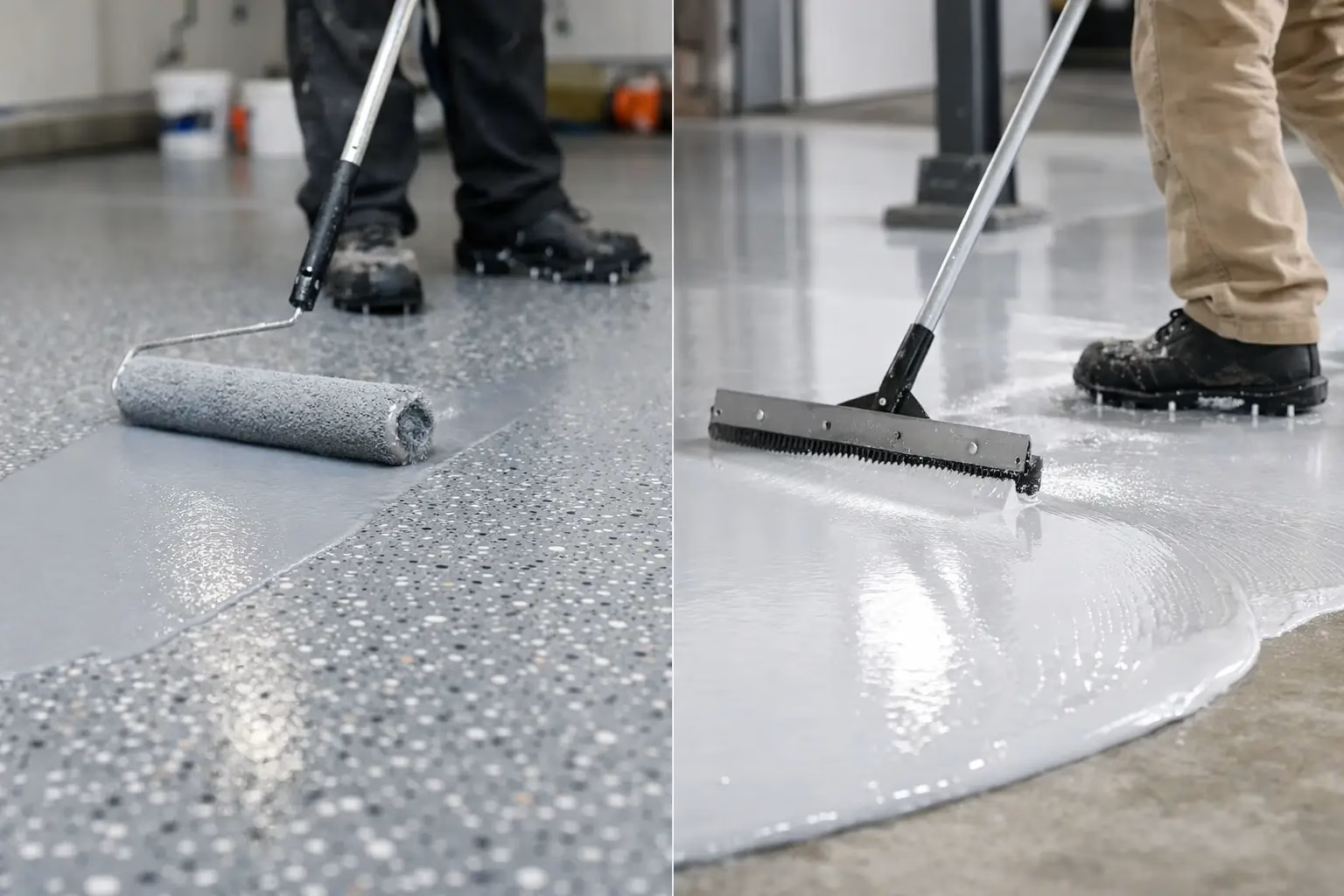
We begin by mechanically preparing the concrete to create the proper surface profile for adhesion. We repair cracks, spalling, pitting, and damaged areas before coating. Then we build the floor in layers, including a full-flake broadcast finish that adds visual depth, texture, and wear resistance. The final protective topcoat seals the system and helps create a clean, durable surface that stands up to real garage life.
Appearance: Gloss Is Not the Only Measure of Quality
Epoxy is often chosen for its glossy appearance, but a glossy floor is not necessarily a durable floor. Epoxy can yellow near windows and garage doors, creating an uneven appearance over time. It may also show scratches, tire marks, and wear more readily depending on the product and finish.
Nanospartic systems hold their color better under UV exposure, making them a stronger choice for garages with natural light, patios, entrances, and showrooms. A full-flake floor also offers a major visual advantage over a single-color coating. The flakes help camouflage dust, small imperfections, and daily debris while creating a finished look that complements cabinets, slatwall, vehicle displays, and organized storage.
The best color blend depends on the space. A lighter blend can brighten a dark garage, while a medium or darker blend may better hide dirt in a workshop or high-traffic commercial area. We help homeowners select a finish that fits how they actually use the room, not just how it looks in a sample photo.
Durability, Moisture, and Hot-Tire Resistance
Concrete protection is where coating decisions become expensive if they are made on price alone. Bare concrete is porous. It absorbs oil, salt, water, and chemicals, which can leave permanent stains and contribute to surface deterioration. Once a slab is already cracked or spalled, covering it without repair only hides the problem temporarily.
Both epoxy and nanospartic coatings can protect concrete when professionally installed. However, nanospartic systems generally offer stronger performance in the areas that matter most to garage owners: UV stability, rapid curing, hot-tire resistance, flexibility, and resistance to abrasion and chemicals.
Flexibility matters because concrete moves. Seasonal temperature shifts, vehicle loads, and minor slab movement can place stress on a rigid coating. No coating can stop structural concrete movement, and active or significant cracks may require a different repair approach. Still, a well-designed polyaspartic and nanospartic system is better suited than conventional epoxy to handle the normal stresses of a working garage floor.
Is Epoxy Ever the Right Choice?
Epoxy still has uses in select indoor commercial settings where UV exposure is minimal, cure time is not urgent, and the environment can be carefully controlled. It may also be considered when a project has a very limited initial budget and the owner understands the trade-offs.
For a residential garage, basement entry, workshop, patio, or commercial garage, we do not view conventional epoxy as the preferred long-term solution. The lower upfront price can be outweighed by slower installation, possible discoloration, hot-tire concerns, and the cost of repairing or recoating a failed floor later.
The better value comes from choosing a system designed around the slab, the environment, and the way the space will be used. That means proper diamond grinding, concrete repair, professional-grade materials, and a finish that is built to last rather than simply look good on day one.
What a Professional Floor System Should Include
When comparing estimates, ask what happens before the coating is applied. A quality installer should be able to explain how the concrete will be mechanically prepared, how cracks and damaged areas will be addressed, what coating layers are included, and when you can safely return vehicles and equipment to the space.
Also ask about the guarantee. At Garage Floors 4 Less, our FloorX2 Fusion+Nano® system is backed by our 15-year all-inclusive transferable guarantee. That coverage reflects confidence in the complete system, not just a bucket of coating. The floor’s performance begins with the preparation underneath it and continues through every layer above it.
If your garage floor is stained, cracked, peeling, or simply unfinished, picture what it could become before choosing a color. Try our Floor Visualizer to explore a finish that fits your space, or request a free estimate to get practical advice for your concrete and your goals.