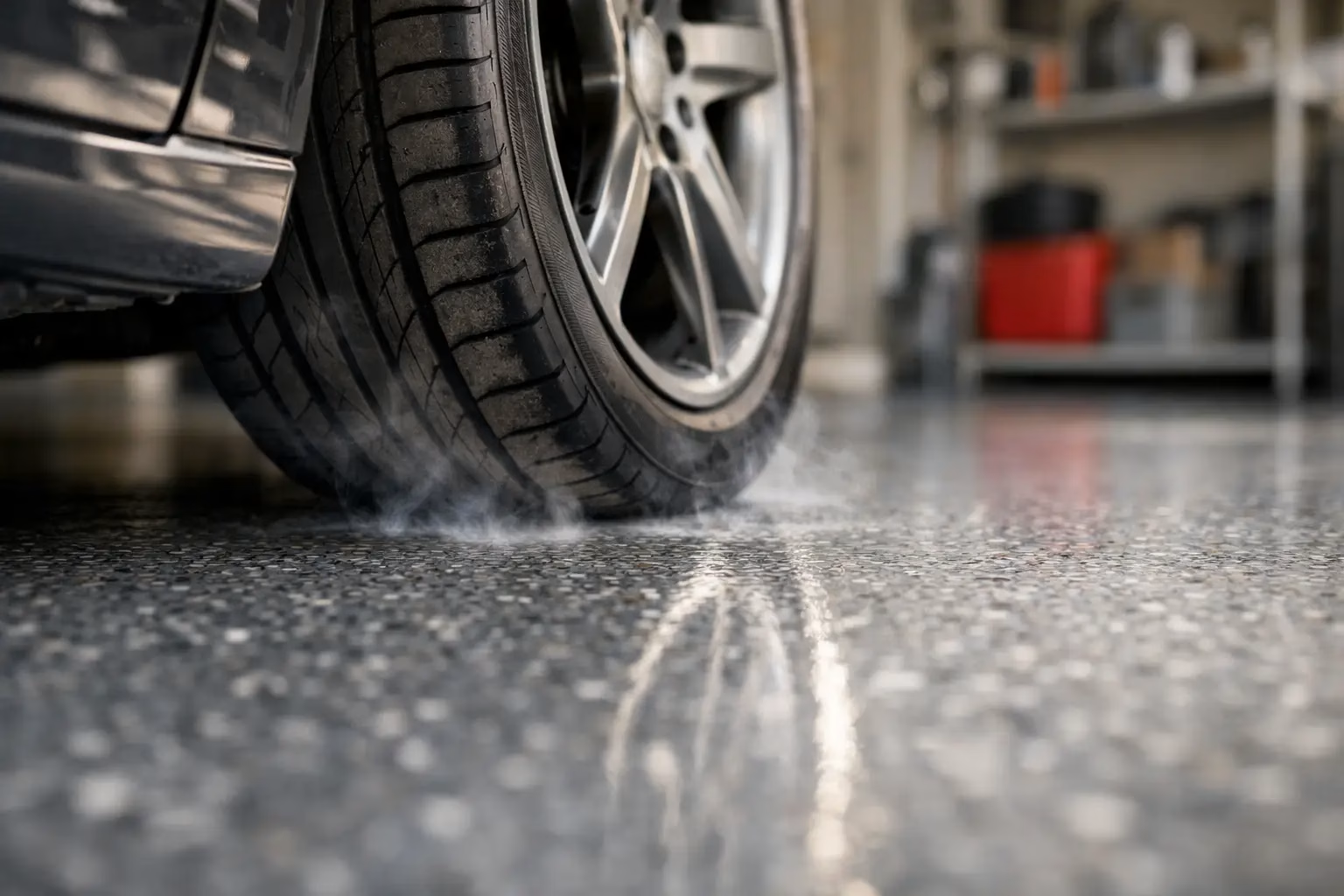
A clean garage floor can look perfect on installation day, then develop tire-shaped peeling weeks later. So, can epoxy withstand hot tires? Sometimes, but the honest answer depends on the epoxy itself, the condition of the concrete, how the floor was prepared, and the heat and contaminants carried in on your vehicle’s tires.
Hot-tire pickup is one of the most frustrating failures homeowners see with conventional epoxy coatings, especially DIY kits and thin single-coat applications. Your vehicle does not need to be a race car to create the problem. Regular driving heats tire rubber, and when those tires sit on a warm coated floor, the rubber, plasticizers, and road residue can bond to a weak or poorly adhered coating. When the vehicle moves again, the coating can lift with it.
At Garage Floors 4 Less, we recommend moving beyond conventional epoxy for garages that need dependable, long-term protection. Our FloorX2 Fusion+Nano® system combines advanced polyaspartic and nanospartic technology for stronger adhesion, faster curing, and far better resistance to the conditions that cause ordinary coatings to fail.
Why Hot Tires Can Pull Up Epoxy
Hot-tire pickup is not simply a tire problem. It is usually a bond problem between the coating and the concrete below it.
Concrete is porous and often holds contaminants that are difficult to see: oil, tire dressing, moisture vapor, old sealers, curing compounds, and fine dust. If a coating is rolled over that surface without proper mechanical preparation, it may look good at first but lack the profile and adhesion needed to handle daily garage traffic.
As tires heat up during driving, their rubber becomes softer. The tire then transfers heat, pressure, and residue to the floor while the vehicle is parked. If the epoxy has softened from heat, was not fully cured, or has a weak bond to the slab, the tire can grab the coating. The result may be a bare concrete patch, a lifted edge, or a visible tire-print-shaped failure.
Conventional epoxy can also be less forgiving when temperatures fluctuate. That matters in garages exposed to summer heat, winter cold, and moisture from rain, snow, and road salt. A coating that cannot move and bond effectively with changing slab conditions is more vulnerable over time.
Can Epoxy Withstand Hot Tires When Installed Properly?
A high-quality, professionally installed epoxy system can perform better than a thin DIY coating. Proper diamond grinding, crack repair, moisture assessment, and a correctly applied multi-layer system all improve its chances of resisting hot-tire pickup.
But that does not make epoxy the best choice for every garage. Epoxy has a long history in concrete coatings, and it can be appropriate in certain controlled environments. For a residential garage that sees daily vehicle traffic, temperature swings, road salt, and frequent use, it has limitations worth considering.
Epoxy generally takes longer to cure than advanced polyaspartic systems. It can also yellow or discolor when exposed to UV light, which is noticeable near open garage doors, windows, and entrances. Installation conditions can be more restrictive as well, particularly when temperatures are low or humidity is high.
The issue is not that every epoxy floor will fail. The issue is that homeowners should not have to gamble on a coating system simply because it is familiar or inexpensive at the start. Repairing peeling epoxy later means removing failed material, preparing the slab again, and paying for the job twice.
Why Polyaspartic and Nanospartic Floors Perform Better
The best epoxy for your garage is not epoxy. Our FloorX2 Fusion+Nano® flooring system is designed for the real demands placed on garage concrete, not just for a quick cosmetic improvement.
Polyaspartic and nanospartic coatings develop strong adhesion to properly prepared concrete while offering excellent resistance to hot-tire pickup, abrasion, chemicals, and moisture. Their fast cure time also allows our professional crews to complete many garage floor installations in one day. You get a transformed space quickly, without waiting days before returning your vehicles and belongings.
A full-flake broadcast finish adds more than visual appeal. The decorative flakes create depth, help conceal minor dirt and dust between cleanings, and contribute to a textured finish that makes the floor more practical for an active garage. A durable clear topcoat seals the system and makes spills, salt residue, and routine messes easier to clean.
For homeowners in regions with freeze-thaw cycles, this performance difference is especially valuable. Melting snow and road salt can be carried into the garage for months. In warmer months, sun exposure and heated tires put different pressure on the floor. A professionally installed advanced coating system is built to handle both seasons without the common compromises of conventional epoxy.
Preparation Is What Makes the Coating Last
Even premium coating materials need the right foundation. The most durable topcoat cannot compensate for cracked, dirty, weak, or improperly prepared concrete.
Our process begins with evaluating the slab, including visible cracks, pitting, spalling, old coating residue, and areas affected by oil or moisture. We mechanically prepare the concrete to create the surface profile needed for the coating to anchor securely. This is fundamentally different from acid etching or simply cleaning the slab before applying a retail kit.
Cracks and damaged areas are repaired before the coating system is installed. This helps create a smoother, more finished appearance while protecting the floor from ongoing wear. If your garage has concrete that is flaking, stained, or scarred by years of vehicle traffic, repair should be part of the coating conversation, not an afterthought.
The coating is then applied as a complete system rather than a single paint-like layer. Each layer has a purpose: adhesion, color, decorative flake coverage, and long-term surface protection. That system approach is one reason we can stand behind FloorX2 with a 15-year all-inclusive transferable guarantee.
Signs Your Existing Floor May Be Vulnerable
If you already have an epoxy-coated garage floor, inspect the areas where your vehicle normally parks. Small warning signs can often appear before a larger failure becomes obvious.
Watch for a glossy coating that feels soft or tacky in warm weather, peeling around tire locations, chips at the edges of cracks, bubbles, or white cloudy spots below the surface. Yellowing near the garage door is another common sign of conventional epoxy exposure to sunlight. Dirt that seems permanently embedded in a worn surface may indicate that the clear protective layer has degraded.
Do not try to solve peeling with another coat rolled over the top. New material is only as secure as the failed layer beneath it. The reliable fix involves removing unstable coating, preparing the concrete correctly, addressing slab damage, and installing a system designed for garage conditions.
What You Can Do to Protect a Garage Floor
No coating is indestructible, but a high-performance floor should make garage ownership easier, not more delicate. Sweep away grit regularly, clean up oil and chemical spills promptly, and rinse off salt residue during winter. Avoid dragging sharp metal objects across the surface, and use protective pads under heavy equipment that stays in one spot.
Tire mats can catch water and debris, but they are not a substitute for a properly installed coating. In fact, mats that trap moisture against bare or poorly coated concrete can create their own maintenance concerns. A professionally coated floor gives you protection across the entire garage, including the areas that do not fit under a mat.
Hot tires should not force you to park outside, avoid using your garage, or accept peeling patches as normal. Use the Floor Visualizer to explore a finish that fits your garage, then request a free estimate from our team. A floor built for real vehicle traffic lets your garage work as hard as the rest of your home.