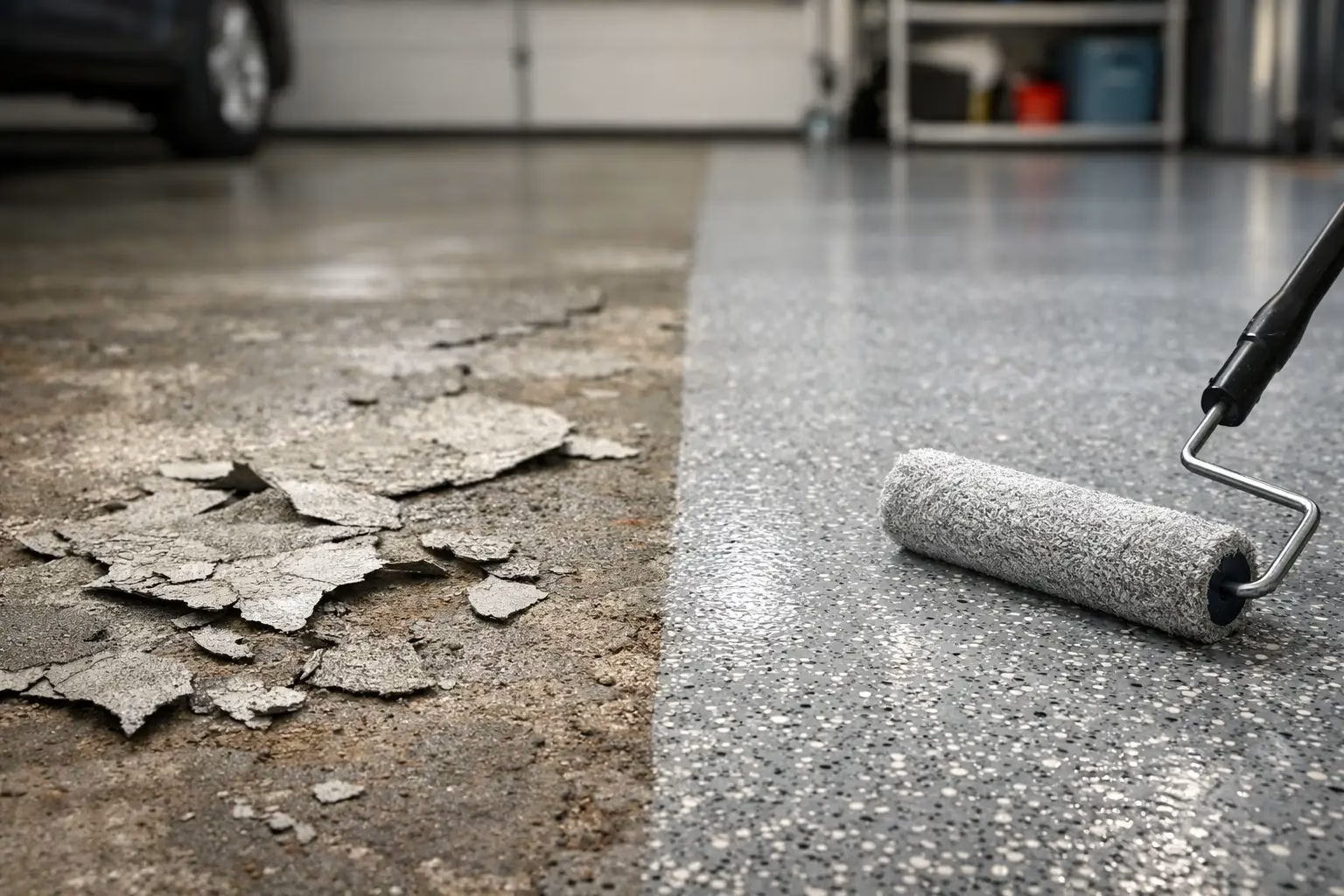
A garage coating rarely peels because of one bad day or one dropped tool. When homeowners ask why garage coatings peel, the answer usually begins beneath the coating itself. The concrete may have held moisture, contaminants, weak surface material, or damage that was never properly addressed. Once the bond is compromised, normal garage use exposes the problem fast – especially under hot tires, road salt, freeze-thaw cycles, and daily vehicle traffic.
A peeling floor is frustrating because it makes a garage look worse than bare concrete. It also creates more work: loose coating flakes, exposed patches, and a surface that is harder to clean. The good news is that peeling is preventable when the slab is repaired, prepared, and coated with the right professional system.
Why Garage Coatings Peel: The Real Causes
Coatings are only as reliable as their connection to the concrete. A high-quality product cannot compensate for a slab that has not been properly evaluated and prepared. These are the issues we see most often when inspecting failed garage floors.
Poor concrete preparation
Most coating failures start with inadequate surface preparation. Concrete is not naturally smooth or uniform, even when it looks that way. It has pores, small surface defects, hard spots, weak cement paste, and contaminants that can interfere with adhesion.
A coating needs a clean, properly profiled surface to mechanically bond to the slab. Simply sweeping, pressure washing, or acid etching is not enough for many garage floors. Professional diamond grinding removes weak surface material and opens the concrete profile so the base coat can anchor into the slab rather than sit on top of it.
This is one reason many DIY epoxy kits disappoint. The preparation instructions may sound straightforward, but garages often have years of oil residue, tire dressing, de-icing salts, sealers, and invisible contaminants embedded in the concrete. If those materials remain, the coating may look great at first and then release in sheets or patches later.
Moisture moving through the slab
Concrete is porous. Moisture vapor can travel upward through a slab, particularly in garages with no vapor barrier, older concrete, drainage concerns, or seasonal groundwater changes. When that vapor becomes trapped beneath a coating, it can weaken the bond and cause bubbling, delamination, or peeling.
This does not always mean there is standing water on the floor. A slab can look dry and still have moisture vapor pressure that affects coating performance. That is why professional installers assess the concrete condition before recommending a system. The correct approach depends on the slab, the environment, and the coating technology being used.
In areas with changing temperatures and repeated freeze-thaw conditions, moisture management matters even more. Water can enter cracks and damaged concrete, expand when frozen, and create additional movement below the finished surface.
Oil, salt, and chemical contamination
Garages collect contaminants that are easy to overlook. Motor oil, transmission fluid, gasoline, tire shine, road salt, cleaners, and old paint all affect adhesion. Even a small amount of oil can migrate into porous concrete and prevent a coating from bonding correctly.
Salt is especially hard on garage floors. It is tracked in during winter, mixes with melting snow, and works its way into cracks and pores. Over time, this can contribute to concrete scaling, spalling, and surface breakdown. Coating over damaged or contaminated concrete without proper repair is not a long-term solution.
Weak, cracked, or deteriorating concrete
Sometimes the coating is not the real failure – the concrete surface is. If the top layer of the slab is dusty, brittle, scaling, or spalling, a coating can detach with that weak layer still attached to its underside.
Cracks, pits, and flaking areas need to be repaired before a new system is installed. Otherwise, the floor may continue to move or deteriorate under the coating. A professional installation includes evaluating whether the slab needs crack repair, spall repair, grinding, or other restoration work before the decorative layers go down.
Hot-tire pickup
Hot-tire pickup happens when warm tires soften or stress a coating and pull it away from the floor as a vehicle is parked. It is a familiar problem with lower-grade epoxy systems and improperly prepared surfaces. The issue is not just heat. Tire plasticizers, friction, weight, and repeated parking in the same location can all contribute to the failure.
A garage floor should be designed for vehicles, not just for a good first impression. Advanced polyaspartic and nanospartic technologies provide stronger performance against hot tires, abrasion, and daily traffic than conventional epoxy coatings. That difference becomes obvious after a few seasons of real use.
Why Some Epoxy Floors Fail Sooner
Epoxy has a long history in garage flooring, and it can provide a better-looking surface than bare concrete. However, conventional epoxy has limitations that homeowners should understand before investing in a floor.
Many epoxy systems cure slowly, can be sensitive to installation conditions, and may yellow or discolor when exposed to UV light. They can also be more vulnerable to hot-tire pickup and may not perform as well through the temperature swings common in a working garage. A low-cost kit is particularly likely to have thin coverage, limited surface prep, and little protection against moisture-related failure.
The best epoxy for your garage is not epoxy. A modern coating system should be selected for the demands of the space, not just the lowest upfront price. For garages, workshops, and commercial environments, fast-cure polyaspartic and nanospartic coatings offer clear performance advantages when installed over properly prepared concrete.
The Professional Fix for a Peeling Garage Floor
A peeling coating should not be patched over without finding out why it failed. Covering loose material with another layer usually creates another weak point. The old coating must be mechanically removed where necessary, the underlying concrete assessed, and any cracks, spalls, or damaged areas repaired.
At Garage Floors 4 Less, our process begins with the slab rather than the color selection. We diamond-grind the concrete to establish the proper surface profile, repair damaged areas, and build the floor with a multi-layer FloorX2 Fusion+Nano® system. This high-performance polyaspartic and nanospartic technology is designed for strong adhesion, UV stability, moisture resistance, and resistance to hot-tire pickup.
For many homeowners, a full-flake broadcast finish is the practical choice. It creates a finished, textured appearance that helps disguise everyday dust and small marks while making the floor easier to maintain. The flakes are fully broadcast into the base coat, then protected with durable clear topcoats. The result is a garage floor that looks intentional, not simply covered.
Professional preparation also allows for fast installation without skipping the steps that matter. In many cases, we can complete a garage floor in one day so homeowners can get back to using the space sooner. The system is backed by our 15-year all-inclusive transferable guarantee, providing protection that a typical DIY kit cannot offer.
How to Prevent Future Peeling
The most effective prevention happens before the coating is installed. Choose an installer that explains how they will prepare the concrete, test for potential moisture concerns, and handle cracks or spalling. A quote should account for the condition of the slab, not assume every garage is ready for coating as-is.
After installation, basic care helps protect the finish. Sweep away abrasive grit, rinse off heavy salt residue, and clean spills before they sit for long periods. Avoid dragging sharp metal objects across the surface. These habits preserve the appearance of any floor, but they cannot make up for poor preparation – which is why the installation process remains the deciding factor.
A garage floor should handle the way you actually live: wet vehicles, winter salt, toolboxes, storage, bicycles, and the occasional project that gets messy. If your current coating is peeling, it is a sign to look below the surface and correct the cause rather than hide it. Try our Floor Visualizer to explore a finish that fits your garage, or request a free estimate to find out what your concrete needs before the next coating goes down.