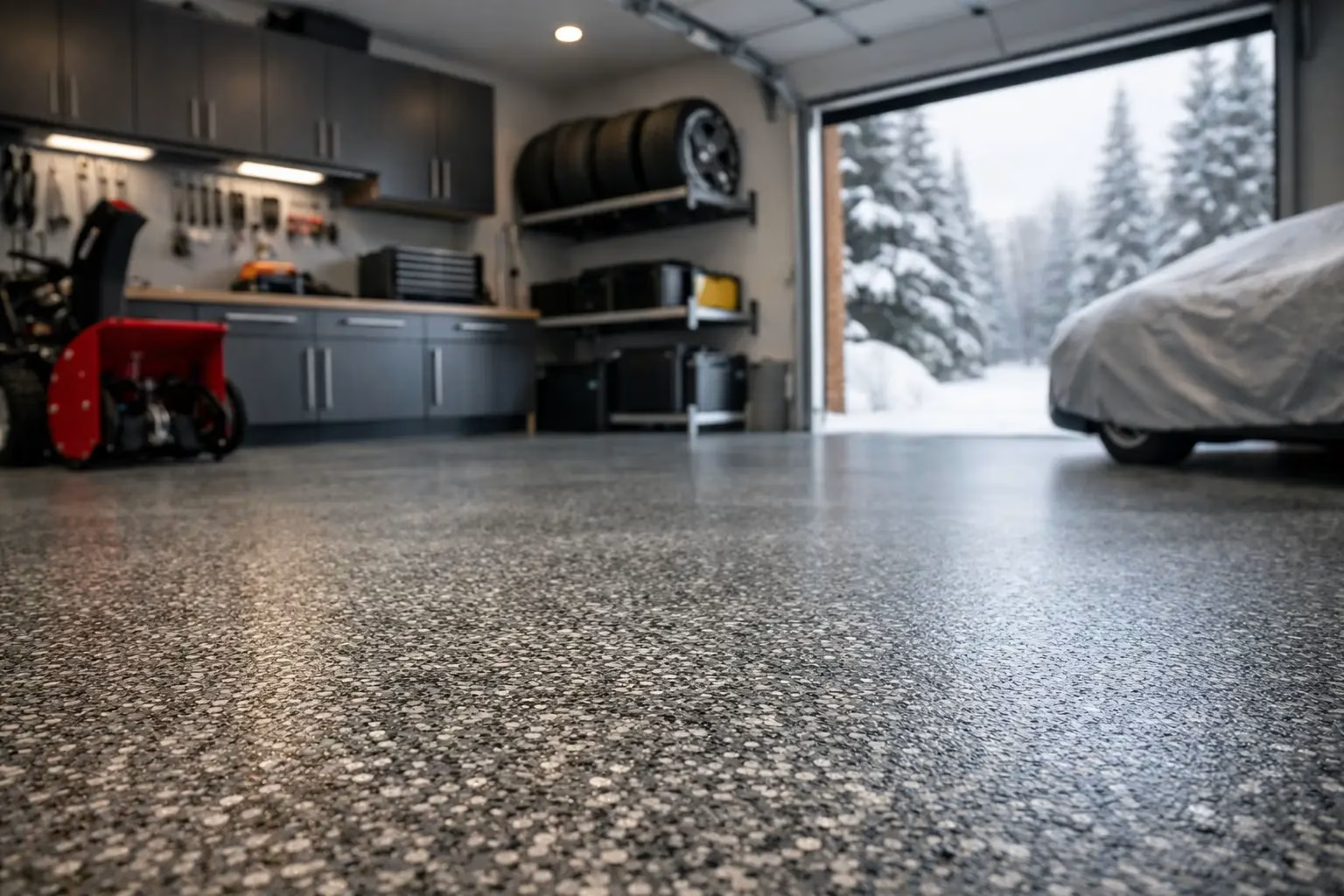
A garage floor can look great on installation day and still fail where it matters most: beneath hot tires, beside the snow-covered vehicle, or along a crack that keeps moving through a Canadian winter. That is why homeowners researching epoxy alternatives are asking a better question than, “What coating looks good?” They want to know what will stay bonded, resist stains, and keep its finish when the garage is used as a real working space.
Epoxy has a long history in concrete coatings, and it can still have a role in certain controlled commercial applications. But conventional epoxy is not our preferred solution for residential garages. It cures slowly, can yellow with UV exposure, and is more vulnerable to hot-tire pickup and temperature-related stress than newer coating technologies. For most garage floors, the best epoxy is not epoxy.
At Garage Floors 4 Less, we use FloorX2 Fusion+Nano® systems that combine polyaspartic and nanospartic technology with professional concrete preparation and a full-flake broadcast finish. The result is a floor designed for the demands that make garages difficult: road salt, melting snow, dropped tools, vehicle traffic, moisture, and freeze-thaw conditions.
Why homeowners look for epoxy alternatives
The bare concrete in a garage is more than an appearance problem. It absorbs oil, road salt, moisture, and tire residue. Over time, that exposure can lead to dusting, stains, pits, spalling, and cracks that make the space harder to clean and less enjoyable to use.
DIY epoxy kits appear to offer a quick fix, but the coating is only as reliable as the slab beneath it. Concrete must be properly evaluated, repaired, mechanically prepared, and cleaned before a coating system is installed. If contamination, weak concrete, moisture vapour, or smooth factory-finished surfaces are ignored, even a good-looking coating can peel or delaminate.
Conventional epoxy also has practical limitations. Longer cure times can leave a garage out of service for days. Epoxy may amber or discolor in sunlight, particularly near open garage doors. Its performance can also be challenged by hot tires and seasonal expansion and contraction. These are not minor concerns when you want to park vehicles, store equipment, and use the room every day.
The leading epoxy alternatives for garage floors
Not every alternative belongs in every garage. The right system depends on the slab condition, exposure to sunlight and moisture, how quickly you need the space back, and whether the floor faces light residential use or demanding commercial traffic. Still, polyaspartic and nanospartic coatings have become the leading choices for professionally finished garages.
Polyaspartic coatings
Polyaspartic coatings are known for fast curing, excellent adhesion when installed over properly prepared concrete, and strong resistance to UV-related yellowing. This makes them especially useful in garages with windows, glass doors, or frequent open-door exposure.
A professionally installed polyaspartic system can often be completed in one day, allowing you to return to normal use much faster than with traditional epoxy. It also offers excellent resistance to stains, abrasion, and hot-tire pickup when the full system is selected and installed correctly.
Fast cure is a major advantage, but it requires experienced installers. Polyaspartic materials have a shorter working time than epoxy, so surface preparation, repair work, mixing, and application must be coordinated precisely. It is not simply a faster version of a DIY coating.
Nanospartic coatings
Nanospartic coatings build on the benefits of polyaspartics with advanced chemistry designed for high performance and efficient installation. In a quality multi-layer system, nanospartic materials can provide durability, clarity, chemical resistance, and a dependable finish over a decorative flake layer.
This technology is particularly well suited to residential garages because it creates a sealed, easy-to-clean surface without the slow cure and UV concerns associated with conventional epoxy. The finish holds its color better, resists everyday garage contaminants, and helps turn an unfinished concrete slab into a clean, usable extension of the home.
FloorX2 Fusion+Nano® uses the strengths of polyaspartic and nanospartic chemistry rather than relying on a single conventional coating layer. That layered approach matters because a garage floor needs more than a glossy topcoat. It needs a system that bonds to prepared concrete, reinforces the finished surface, and stands up to real use.
Polished concrete and concrete densifiers
Polished concrete is another option, particularly for some commercial spaces and modern interior designs. It hardens and refines the concrete surface rather than covering it with a decorative coating. A densifier can reduce dusting and make a slab easier to maintain.
However, polished concrete does not conceal significant cracking, pitting, or discoloration, and it does not deliver the same decorative flexibility as a full-flake coating. It can also be slippery when wet unless the finish and maintenance plan account for traction. For a garage with damaged concrete or a homeowner who wants a finished, consistent appearance, a flake broadcast system is usually the more practical choice.
Interlocking tiles and garage mats
Tiles and mats can cover an unattractive floor quickly, but they do not restore the concrete itself. Moisture, debris, and road salt can collect beneath them, while shifting sections and edge transitions may become frustrating over time. They can work as temporary surface protection, but they are not a substitute for repairing and professionally coating a deteriorating slab.
What makes a garage coating last
Material selection matters, but preparation determines whether a coating system has a fair chance to perform. Before we coat a floor, we address cracks, spalling, pitting, and weak concrete. We then mechanically prepare the surface to create the profile needed for a dependable bond.
This work is where many low-cost installs and DIY projects fall short. Acid etching, sweeping, and a quick rinse cannot reliably remove years of contamination or prepare every slab evenly. Professional diamond grinding opens the concrete surface and helps create the foundation a high-performance coating needs.
After preparation, a full-flake broadcast finish does more than add color and texture. It creates a more forgiving visual surface that helps disguise minor dust and everyday marks while delivering a finished, showroom-quality look. The final clear coats seal the flakes and make routine cleaning straightforward: sweep debris, rinse as needed, and use a mild cleaner for stubborn grime.
Choosing between epoxy alternatives
If the garage receives direct sunlight, a UV-stable polyaspartic or nanospartic system is a stronger choice than conventional epoxy. If you need to park in the garage quickly, fast-cure technology is also the clear advantage. If the slab has cracks, surface damage, or moisture-related concerns, the answer starts with a professional assessment rather than selecting a coating from a shelf.
Commercial garages, workshops, warehouses, and showrooms may require a different build-up based on traffic, loads, chemicals, and safety requirements. A decorative flake system may be ideal for a customer-facing showroom or residential garage, while a purpose-built commercial coating system may better suit heavy equipment and industrial use.
The common thread is not a one-size-fits-all product. It is a properly specified system, installed over properly prepared concrete.
A better long-term garage floor investment
The lowest initial price is rarely the lowest cost when a floor must be stripped and recoated after peeling or hot-tire damage. A professionally installed FloorX2 Fusion+Nano® floor protects the concrete, improves the appearance of the garage, and gives you a space that is easier to maintain year after year.
We back our FloorX2 system with a 15-year all-inclusive transferable guarantee because lasting performance should not be a gamble. Whether you are tired of stained concrete, planning a full garage organization project, or restoring a floor damaged by salt and winter wear, the right coating can change how you use the entire space.
Try our Floor Visualizer to explore finish options, or request a free estimate to find the epoxy alternative that fits your garage, slab condition, and timeline.