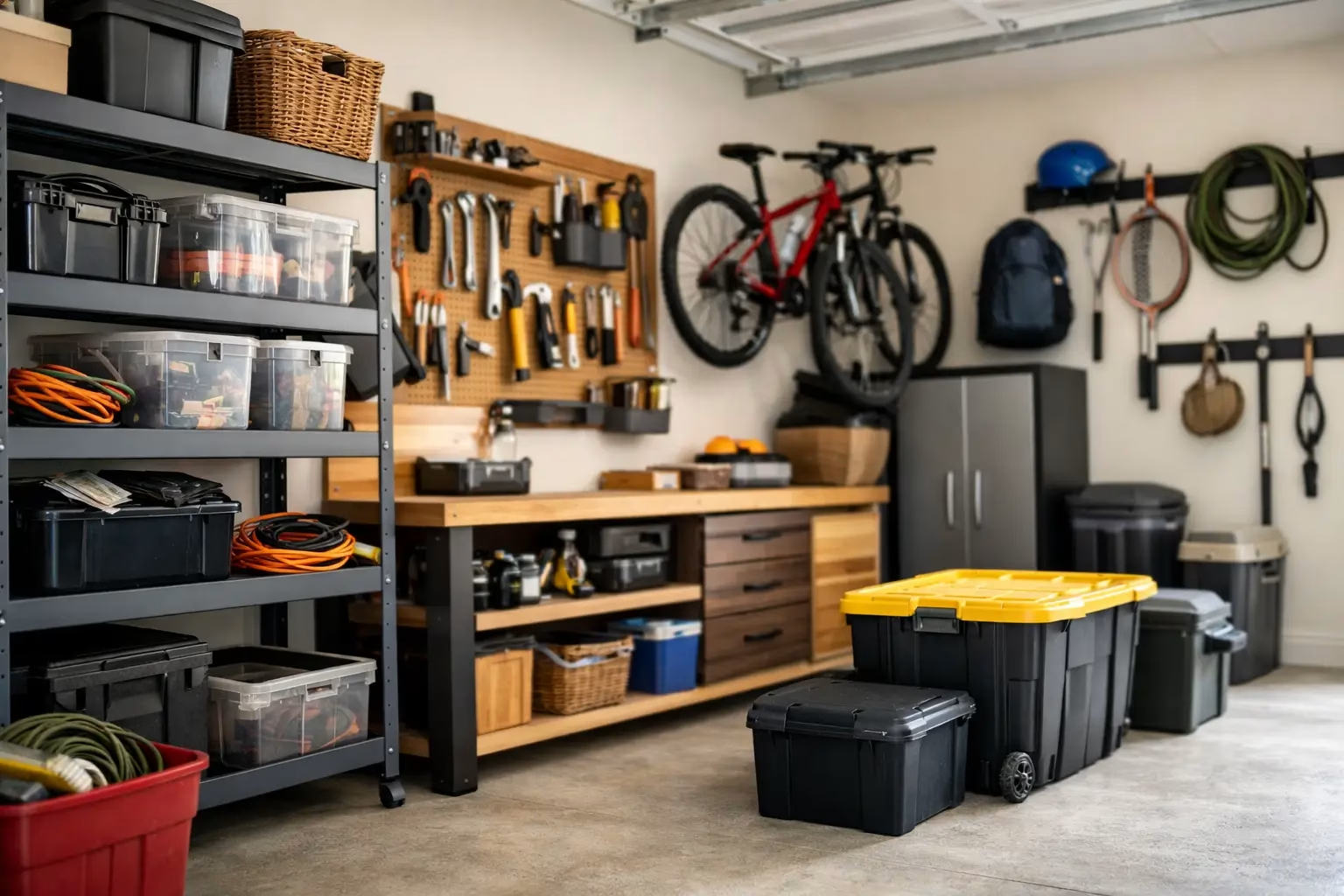
A garage becomes frustrating when every item competes for the same few square feet of concrete. The best garage storage ideas do more than hide clutter. They create clear walkways, protect expensive equipment, make seasonal changes easier, and keep the floor open for vehicles, projects, and daily life.
For most homeowners, the goal is not to make the garage look like a warehouse. It is to give every frequently used item a sensible home while preserving the open, finished appearance that makes the space feel larger. Start with how you actually use the room, then choose storage that works with the walls, ceiling, and floor rather than consuming them.
Start With the Floor You Want to Keep Clear
Before buying cabinets or bins, decide what deserves floor space. Vehicles, a workbench, a rolling tool chest, and occasionally bulky equipment may need to stay accessible. Nearly everything else should move to the wall, into a cabinet, or overhead.
This is also the right time to address damaged concrete. Cracks, pitting, road salt stains, and peeling coatings make a garage feel unfinished, no matter how organized the shelves are. A professionally prepared full-flake floor creates a bright, clean base that is easier to sweep and much more forgiving of everyday messes.
At Garage Floors 4 Less, we use FloorX2 Fusion+Nano® polyaspartic and nanospartic coating systems because a garage floor needs more than cosmetic improvement. Unlike conventional epoxy, which has a long history in garage coatings but can yellow, peel, and struggle with hot-tire pickup, advanced polyaspartic and nanospartic systems offer UV stability, rapid cure times, and performance suited to freeze-thaw conditions. The result is a floor worth keeping visible.
Garage Storage Ideas That Make Every Zone Work Harder
1. Build storage around activity zones
Divide the garage by purpose: vehicle care, yard work, sports gear, tools, recycling, and seasonal items. This prevents the familiar problem of storing a snow shovel beside camping equipment or putting car-cleaning supplies across the room from the vehicle.
Zones do not require labels on every shelf. They require consistency. When related items return to the same area, cleanup takes minutes instead of becoming a weekend project.
2. Use slatwall for the items you reach for most
Slatwall turns unused vertical space into adaptable storage. Hooks, baskets, shelves, and specialty holders can be moved as your needs change, making it a stronger long-term choice than drilling a new hook into drywall every time you buy another tool.
It works especially well for rakes, brooms, extension cords, hoses, folding chairs, and frequently used hand tools. Keep the most used items between waist and shoulder height. Reserve the highest sections for lighter or less-used gear.
3. Add closed cabinets for visual calm
Open shelving is efficient, but it can make a garage look crowded quickly. Cabinets are the better answer for chemicals, paint supplies, power tools, vehicle products, and miscellaneous items that do not need to be on display.
Choose durable garage cabinets with adjustable shelves and easy-to-clean surfaces. If you have children or pets, lockable storage for chemicals and sharp tools is worth considering. Cabinets cost more than basic shelves, but they often make the biggest difference in the finished look of the room.
4. Store seasonal items overhead
Overhead storage is one of the most practical ways to reclaim floor space. Holiday decorations, camping supplies, luggage, winter tires, and off-season sports equipment are ideal candidates because they are bulky but not needed every day.
The trade-off is access. Do not place anything overhead that you need weekly, and do not overload a ceiling system simply because the platform has room. Professionally installed overhead storage should be matched to the garage structure and used within its rated capacity.
5. Give bicycles a dedicated parking plan
Bikes are awkward because they are used often yet take up significant room. Wall-mounted vertical hooks work well in narrow garages, while horizontal racks can be easier for children or heavier bikes. Ceiling lifts save space but are best for bicycles used less frequently.
Measure first. A bike storage solution that blocks a car door, cabinet drawer, or walkway will not stay organized for long.
6. Create a drop zone by the entry door
A small drop zone prevents everyday clutter from spreading through the garage. A narrow cabinet, bench, or wall organizer can hold shoes, backpacks, dog-walking supplies, umbrellas, and reusable shopping bags.
This simple addition is particularly useful when the garage is the family’s main entry point. It keeps wet footwear and loose items from reaching the house while giving everyone a predictable place to unload.
7. Use clear bins only where they help
Clear bins are helpful for holiday decor, small hardware, and hobby supplies because the contents are easy to identify. For visually busy categories, however, matching opaque bins with clear labels can create a cleaner appearance.
Avoid storing heavy items in large bins. A bin full of books, tools, or automotive fluids becomes difficult and unsafe to lift. Use smaller containers for dense materials and reserve larger bins for lighter seasonal items.
8. Make one wall the tool center
Tools are easier to find when they live together. A tool wall can combine slatwall accessories, magnetic strips, a workbench, and a lockable cabinet for power tools. The setup does not need to resemble a professional shop, but it should make basic repairs possible without searching through multiple totes.
Leave some open work surface if possible. A bench buried under storage becomes another shelf, and that defeats its purpose.
9. Keep recycling and garbage contained
Garbage bags, recycling boxes, returnable bottles, and donation items can quietly take over the garage. Assign a contained area near the door, preferably with bins that slide out or sit beneath a short counter.
The rule is simple: this should be a temporary staging zone, not permanent storage. If the donation box has been there for six months, it is time to schedule the drop-off.
10. Protect sports equipment from damp concrete
Hockey bags, golf clubs, baseball gear, skis, and camping equipment should not sit directly on bare concrete. Moisture and dirt collect underneath, while the equipment is harder to clean and retrieve.
Use wall racks, ventilated baskets, or a raised shelf. This is even more effective over a professionally coated floor, where melted snow, road salt, and water can be wiped or squeegeed away instead of soaking into porous concrete.
11. Plan for vehicle clearance before installation
Storage systems should make parking easier, not tighter. Mark the parking position with tape before selecting cabinets, bike racks, or shelving. Open the car doors, trunk, and hatch in that position to confirm you have working clearance.
For a one-car garage, shallow cabinets and wall-mounted solutions usually provide the best balance. In a larger garage, a cabinet run or dedicated workshop zone may be practical without compromising vehicle access.
12. Leave room for change
The most effective garage organization has some flexibility built in. Families add bikes, hobbies change, children grow, and seasonal equipment accumulates. Fixed storage has its place, but adjustable slatwall, movable hooks, and configurable cabinets give you options later.
This is why we recommend treating garage storage and flooring as one transformation rather than separate projects. A clear layout protects your investment in the floor, while a durable coated surface makes the organized space easier to maintain year after year.
Choose Storage That Supports a Finished Garage
Good garage storage should reduce visual clutter without creating another maintenance problem. Cheap shelving that rusts, overloaded ceiling racks, and loose bins on the floor may add capacity, but they rarely create the clean, usable garage homeowners want.
A better approach is to combine vertical storage for daily gear, closed cabinets for clutter, and overhead systems for seasonal items. Then preserve open floor space with a surface built to handle vehicle traffic, moisture, salt, and hot tires. Our professionally installed FloorX2 Fusion+Nano® system can be completed in as little as one day and is backed by our 15-year all-inclusive transferable guarantee.
Picture the layout before you commit. Try our Floor Visualizer to see how a finished floor can transform the room, or request a free estimate to plan a garage that is easier to park in, work in, and keep organized.